
Boating Lessons Learned: Don’t Forget the Ground.
BLUF: I often focus all my attention on the positive portion of a 12 volt DC circuit when I am troubleshooting and I neglect the ground portion of the circuit.
I was troubleshooting an intermittent 12 volt DC problem on Whacker’s boat the other day. I love that old boat. You might call it “approachable”, kinda like Whacker was.
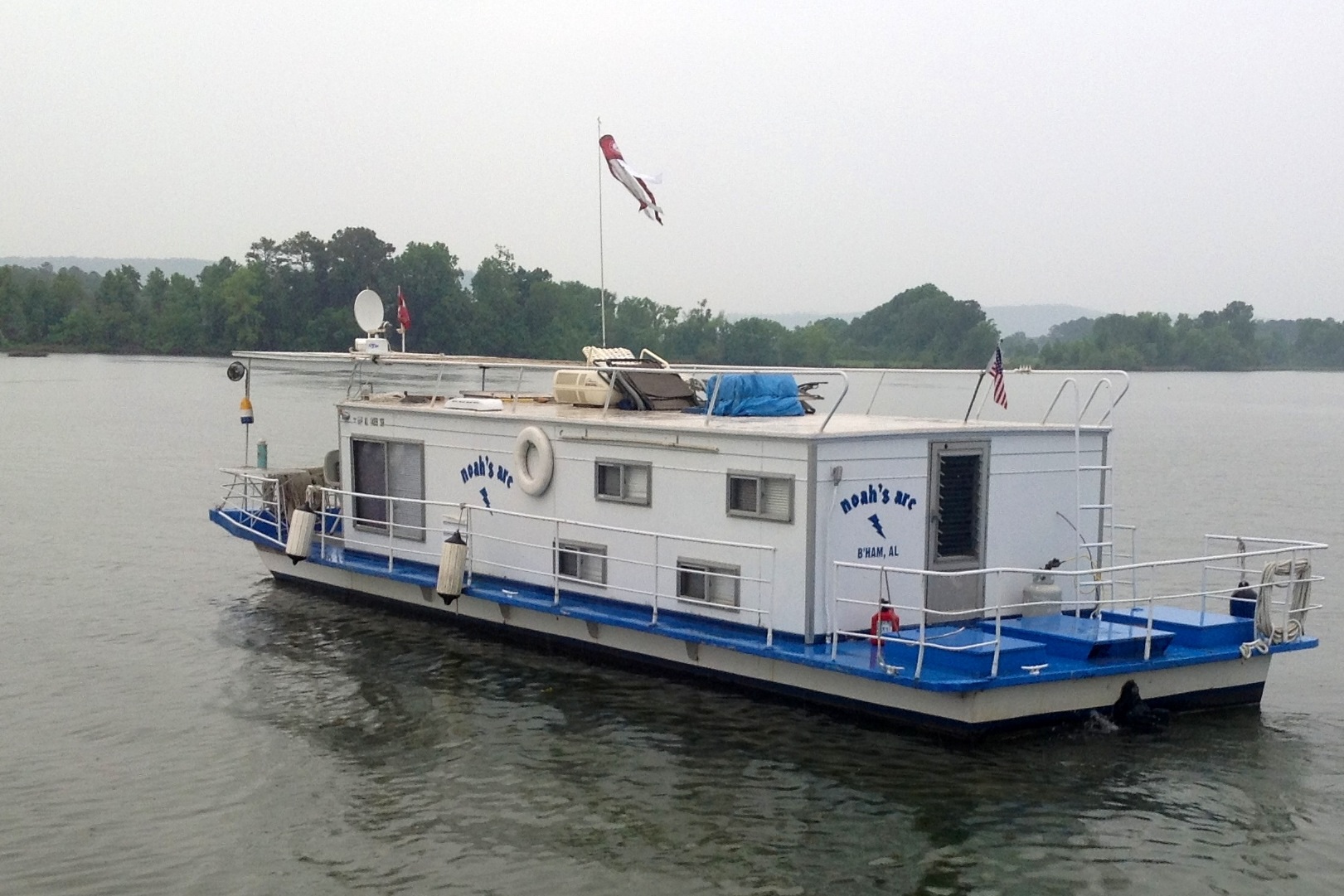
1961 Drifter, Steel Hull, Single 4 cyl Chevy.
This ole boat has seen some river miles. Whacker took it down the Tenn-Tom all the way to Florida one time and spent a month at one of his favorite spots, The Flora-Bama. Talk about one for the bucket list! If this place is unfamiliar to you then you should check out the link for some background and then check out their website. Seems like he made such an impression that they named a drink after him … “The Whacker”. If one of y’all find your way to the Flora-Bama let us know if it is still on the menu.
Anyway … Linda was interested in getting the boat back on the river again after many months sitting idle but the boat would not start. The boat had a number of problems. The batteries were always dead when she showed up at the boat so there was a short somewhere in the system. Even with hot batteries the engine ignition system had an intermittent problem. Sometimes the starter would engage and sometimes it would not. Sometimes you could crank and crank on it and it would not start and other times it would bust right off. Sometimes the engine would run fine for a few minutes and then just die like the ignition switch had been turn off. Yeah!!! A Puzzle. I like working on boating puzzles … as long as they are not on my boat. Note to Self: A little introspection might be in order.
Right off the bat I found the purple ignition switch wire to the starter solenoid was broken almost in two. It was hanging on by one strand of copper. The battery is located in a tight spot right next to the engine and it looks like it may have been damaged when the battery was slid into place. Too Easy!!!
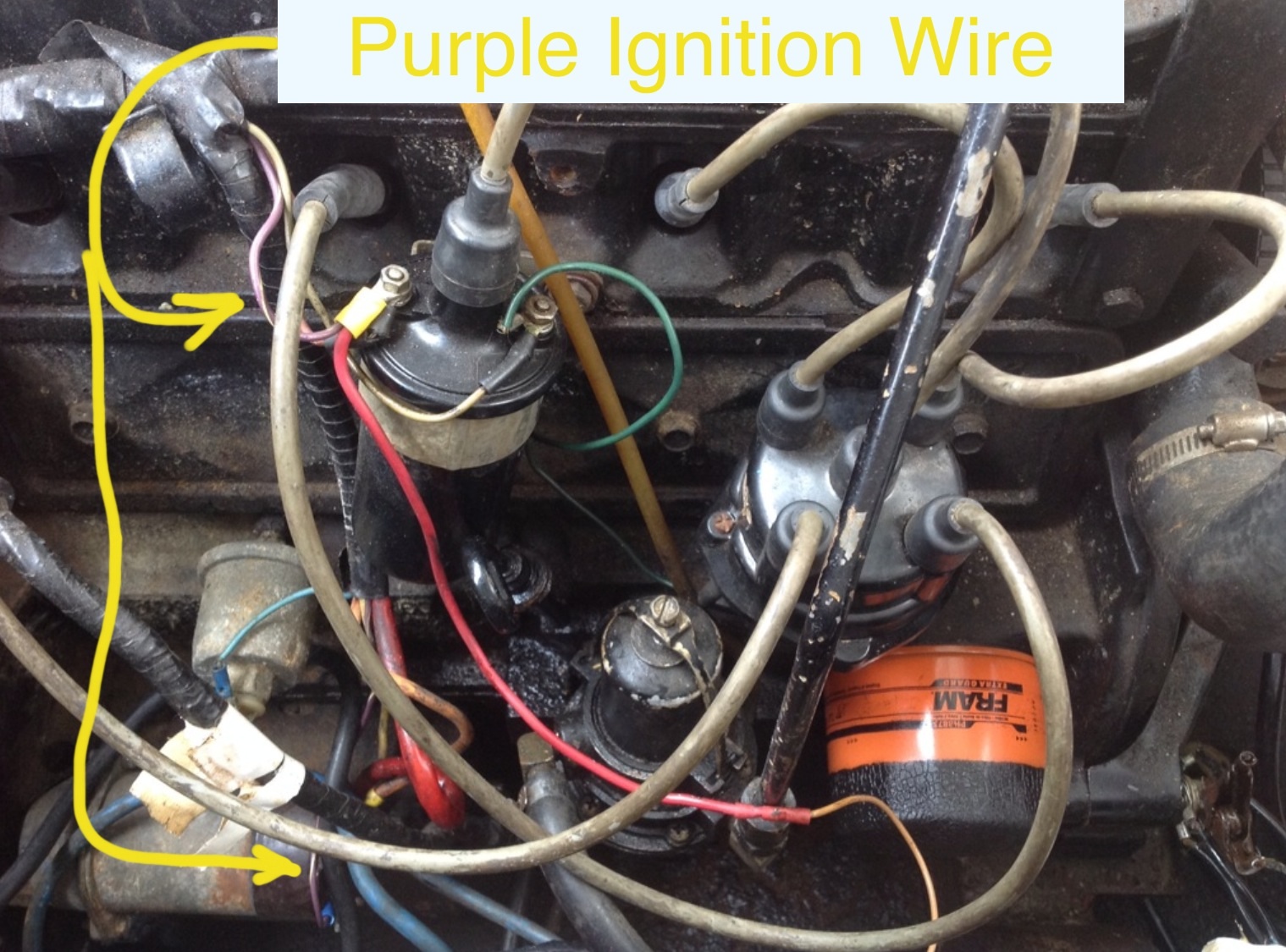
Repaired Ignition Wire. New blue Spade Connector
The engine cranked and Moose and I decide to celebrate our success with a little chill time.

Every Day is a Friday
But as the weekend approached I decided to crank the engine to satisfy my curiosity that I had indeed fixed the problem only to be rewarded with silence. Hum? “Too easy” was right.
So back to the basics. I began by checking the voltage differential between the ignition coil input terminal and the engine battery negative terminal. With the ignition switch on I measured a 12.6 voltage differential but when I checked a few moments later it was 3.6 volts. So I ran a jumper wire straight from the battery positive terminal to the ignition coil input terminal and the engine started right away. Looks like I am on the right track. The coil is not getting enough voltage to deliver a hot spark. Spoiler alert … See where my thinking is limited? Getting enough voltage? What about returning the current back to the battery?
Long story short I spent the next hour or so tracing down the positive circuit from the battery through the ignition switch. I did find a number of wiring issues along the way that I fixed such as cut off and abandoned hot wires that needed to be removed. It is too common on old boats for people to remove a piece of equipment and abandon the 12 volt circuit. I try to remove them when I find them. But I still had not found the root cause of low voltage to the coil. Interestingly with the ignition switch off I measured a clean 12.6 volt differential between the switch and the nearest ground I could find but if I turn the switch on the voltage dropped into the 3.6 range. Eventually I worked my way back to a 12 volt terminal strip located in the engine compartment area. I checked the voltage differential between ignition circuit and the closest ground I could find which was the house battery and low and behold I measured 12.6 volts. Hum? How is it that I read 3.6 volts between the coil and the engine battery ground but I read 12.6 volts between the coil and the house battery ground? Well it is an old boat. Could it be that the grounds somehow are no longer interconnected? So I connected the house and the engine battery grounds together and this established a good ground path for the ignition circuit.
Hum? Sounds like an around about way to establish an engine ground. Well the engine cranks fine now but I still wonder why connecting the engine ground to the battery ground was necessary to correct a bad ground within the engine circuitry. Maybe there is a high resistance in engine battery ground connection to the block? Maybe I will check that tonight.
Boating Lessons Learned: Don’t Forget the Ground.
This post is for informational purposes only. The content herein has a single theme: Mistakes …. or as I call them “Boating Lessons Learned”. While there may be elements of this site that appear to be advice about how to do some task you can be assured that it is not a complete and accurate “how to”. I am partially describing how I did something and what I learned. Do not rely on this information because Mcmanusboatworks.com makes no representations as to accuracy, completeness, correctness, suitability, or validity of any information on this site and is not liable for any errors, omissions, or delays in this information or any losses, injuries, or damages arising from its display or use. All information is provided on an as-is basis.

 Shop Amazon Thanks to all of you that have entered Amazon through my site and made a purchase. It costs you no more and I make a small percentage that goes to defray the cost of operation.


 Boating Lessons Learned