
BLUF: I reduce the risk of a burned shore power plug by selecting a marine grade plug, using marine grade wire, and applying anti-oxidant joint compound to the connections.

Burned Shore Power Plug
I was helping a friend disconnect her shore power cord the other day when I noticed that the plug was warm to the touch. That’s a sure sign that a plug failure is imminent. Sure enough the hot spade was toast.

Her boat is equipped with 4 wire SO cable coming from the boat that terminated in an RV type 30 amp male plug. This is the type of stranded black wire and plug you might find at any local big box electrical supply store. Connected to this and running to the shore power receptacle was your typical yellow marine grade 30 Amp shore power cord.

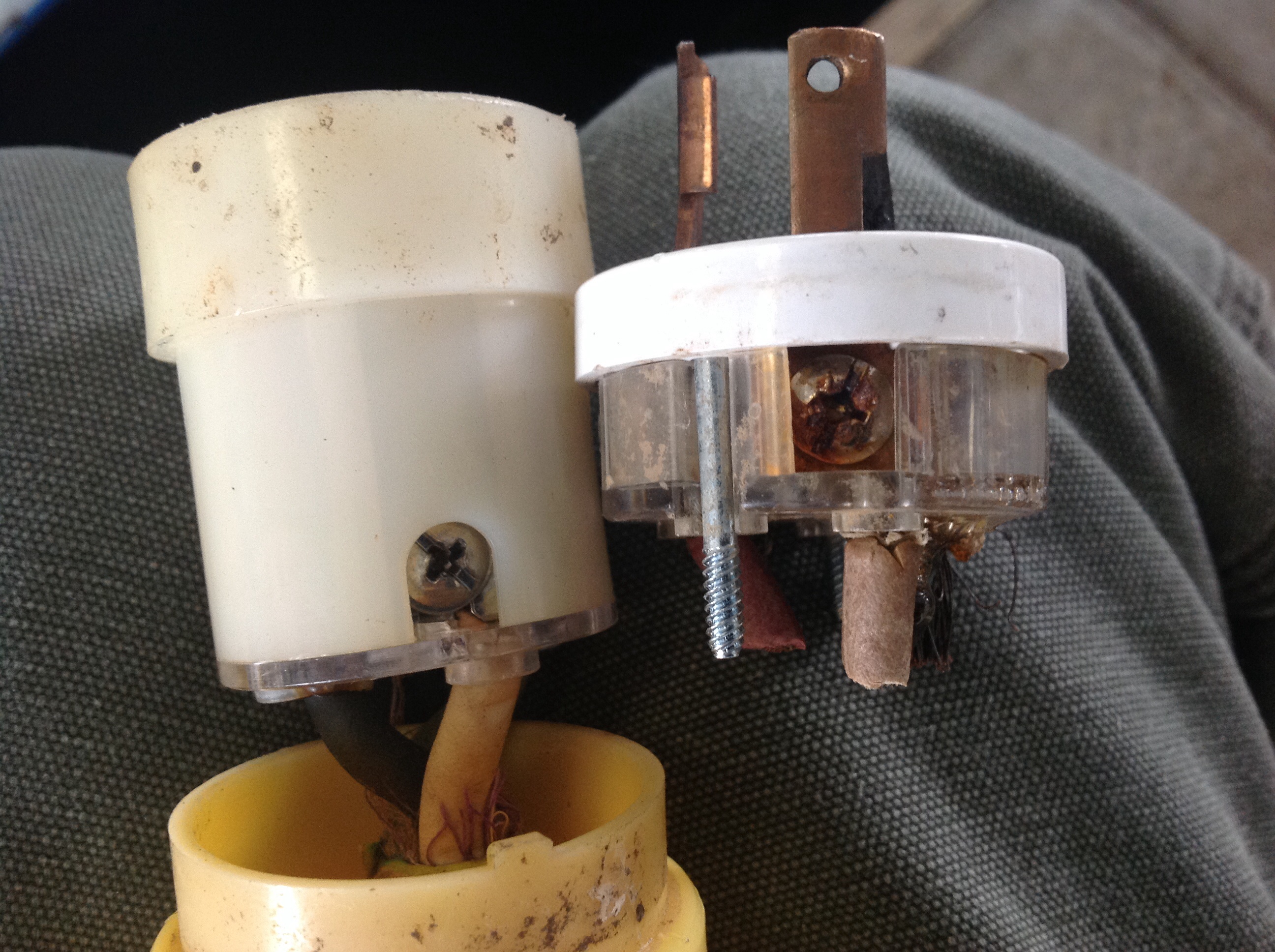
I noticed a couple of interesting things as I was making the repair. The high resistance point appeared to be where the hot wire (black wire) from the standard grade cable connected to the terminal of the standard grade male plug. It had gotten so hot that it melted both the male and the female plug.

The male plug was not marine grade meaning that the terminals were not stainless steel. They showed signs of rust and corrosion contributing to a high resistance which was the root cause of the plug overheating and melting.
Marine Plug vs Standard Plug
You have to look closely to see it but the yellow Marinco plug on the left has stainless steel connectors and is relatively free of corrosion. The screws on the plug on the right are rusty as is the bearing surface where the wires connect. Interestingly the Marinco Male 30 Amp Marine Plug

Marinco 30 Amp Plug
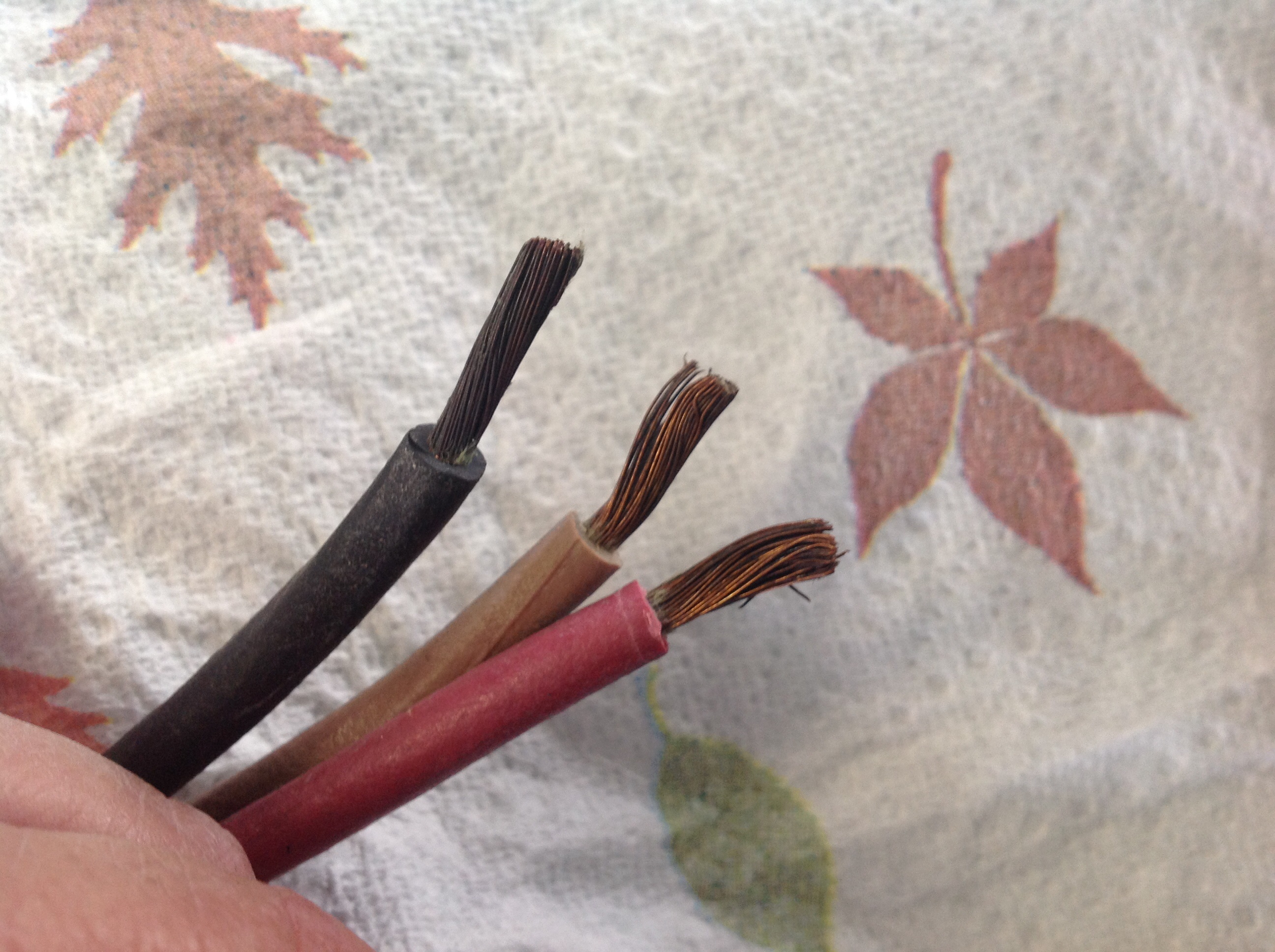
Another thing I noticed as I was striping back the wire insulation on the standard grade power cord was the film of black oxidation on the strands of copper wire. I had cut the wire back over 3 feet to remove a bad nick in the insulation and the strands were still oxidized despite being protected by two layers of insulation and being 3 feet away from exposure to the elements.
Oxidized Copper Wire Strands
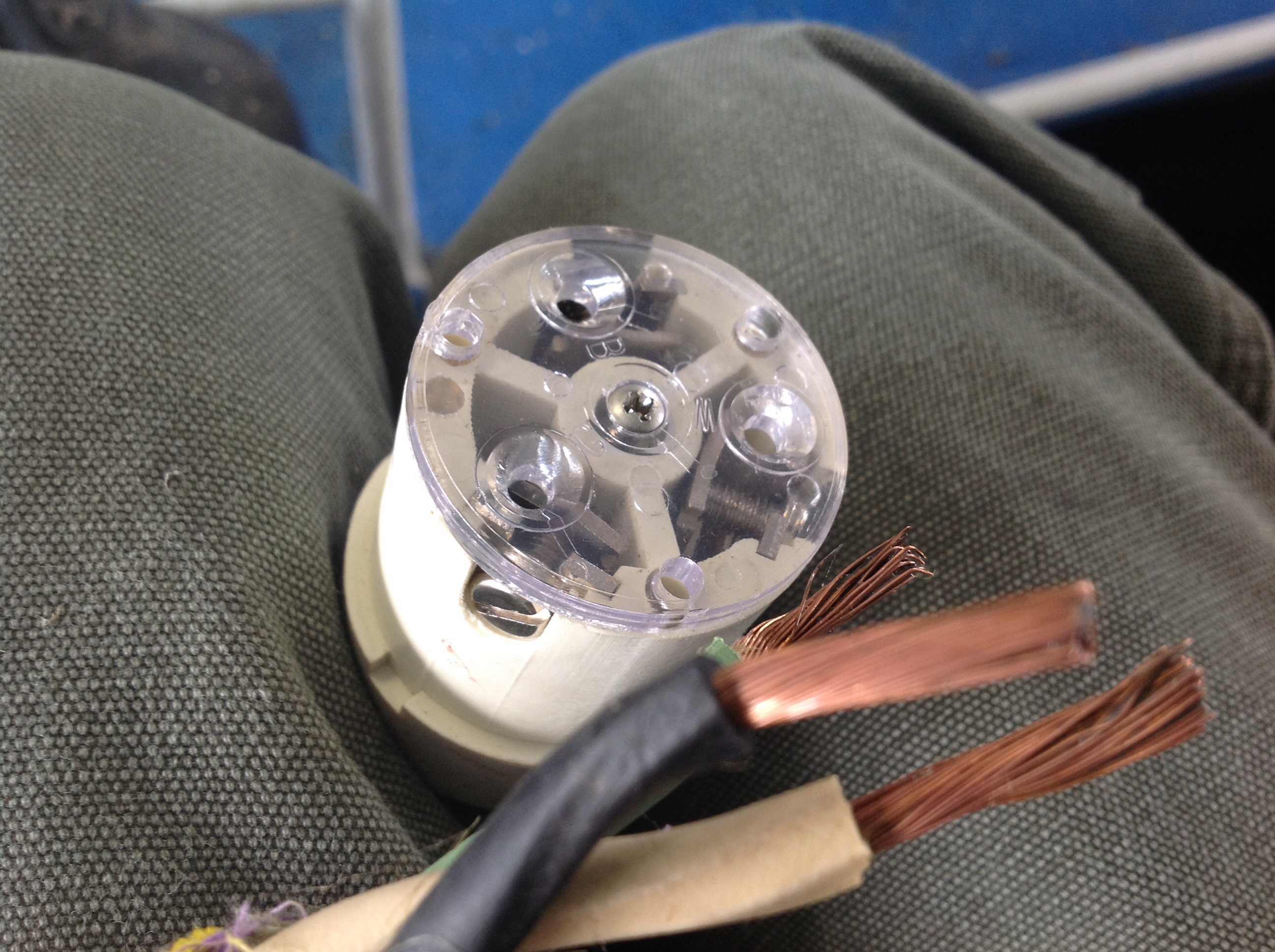
Compare the above photo to the photo below of the relatively oxidation free and shiny wire I found in the marine grade shore power cord. Forgive the blurred photo. I was taking a shot of the plug and did not notice the stark difference between the marine grade and standard grade wire until it was too late to get a good shot of the wire strands on this end of the connection.
Marine Grade Wire
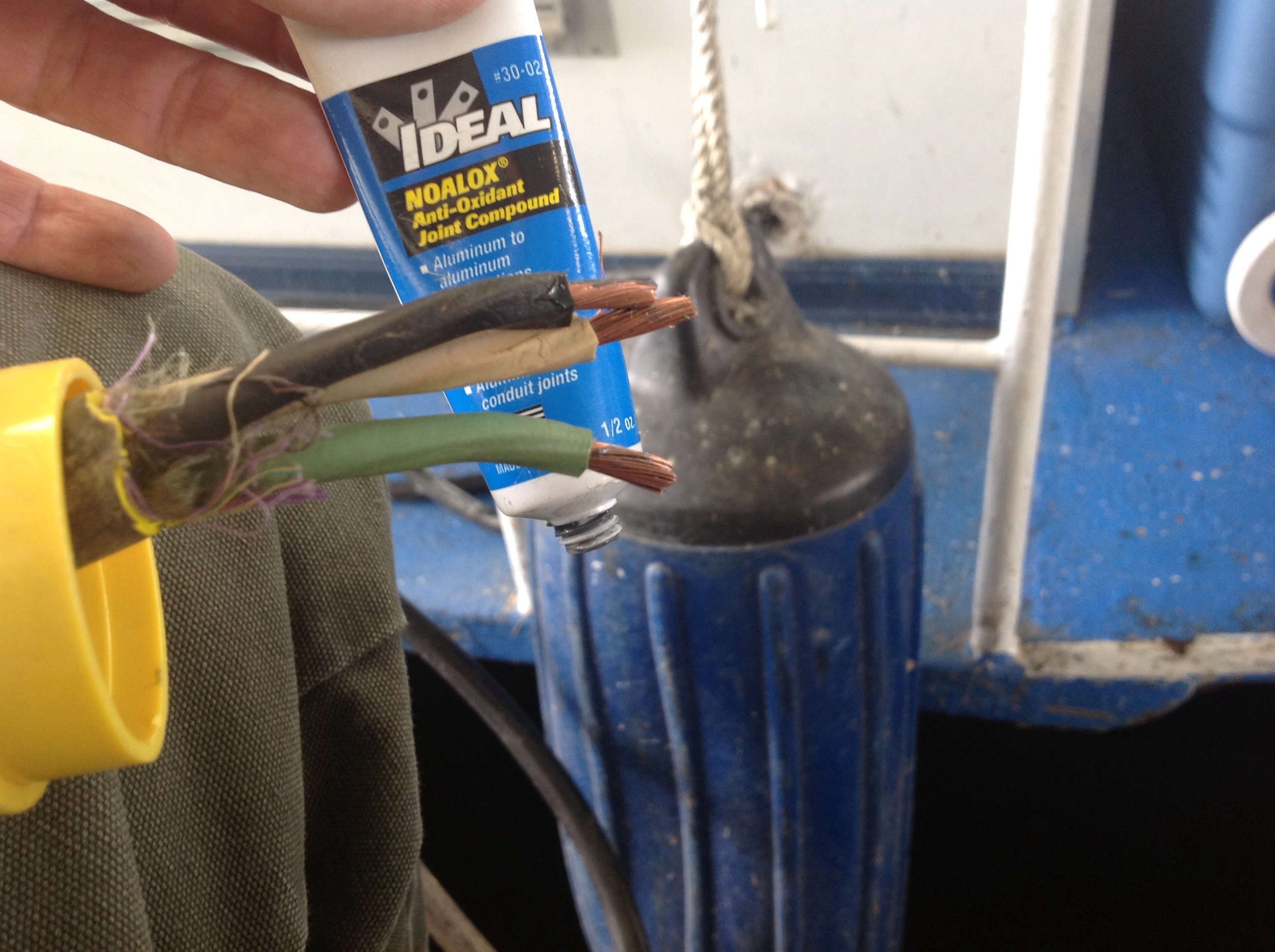
A friend of mine is an industrial electrician. He regularly sees the effect of corrosion on electrical connections and as such has some amazing stories about how much heat can be generated in a high voltage, high current connection. He is a firm believer in using an anti-oxidant compound on all electrical connections. Of course the systems that I deal with operate at a much lower voltage and current but the effect is similar as you have seen in the pictures herein. CLICK HERE
Anti-oxidant Compound
A good source for information on marine electrical systems is the book by Nigel Calder Boatowner’s Mechanical and Electrical Manual: How to Maintain, Repair, and Improve Your Boat’s Essential Systems
But a word of caution before I close out this post. Repair work on marine AC power systems is dangerous and should not be attempted by the novice. A lot can go wrong such as inadvertently reversing the polarity and creating an electrocution hazard. So hire a licensed marine electrician to perform any work on your AC power system.
Boating Lessons Learned: I reduce the risk of a burned shore power plug by selecting a marine grade plug, using marine grade wire, and applying anti-oxidant joint compound
Thanks to all of you that have entered Amazon through my blog and made purchases. CLICK HERE.
This post is for informational purposes only. The content herein has a single theme: Mistakes …. or as I call them “Boating Lessons Learned”. While there may be elements of this site that appear to be advice about how to do some task you can be assured that it is not a complete and accurate “how to”. I am partially describing how I did something and what I learned. Do not rely on this information because Mcmanusboatworks.com makes no representations as to accuracy, completeness, correctness, suitability, or validity of any information on this site and is not liable for any errors, omissions, or delays in this information or any losses, injuries, or damages arising from its display or use. All information is provided on an as-is basis.


 Boating Lessons Learned