Boating Lessons Learned: Pulling Cable, I need one of those “Fish Thingies.”

BLUF: A fish tape turns a frustrating job into an easy morning’s work.

LuLu is a really good friend of mine and when she asked me to help her fix her television cable I couldn’t help but agree. Why the reluctance you ask? Because I just knew that we were going to end up having to pull in a new cable and boy is that a pain. But then again so is seeing a pout overtake this smile.

image

So despite the early hour last Sunday morning we started troubleshooting the source of the problem. We were able to confirm that the cable from the dock was functional simply by taking the TV outside and plugging it in directly to the source cable. We conducted the same test at various locations in the system.
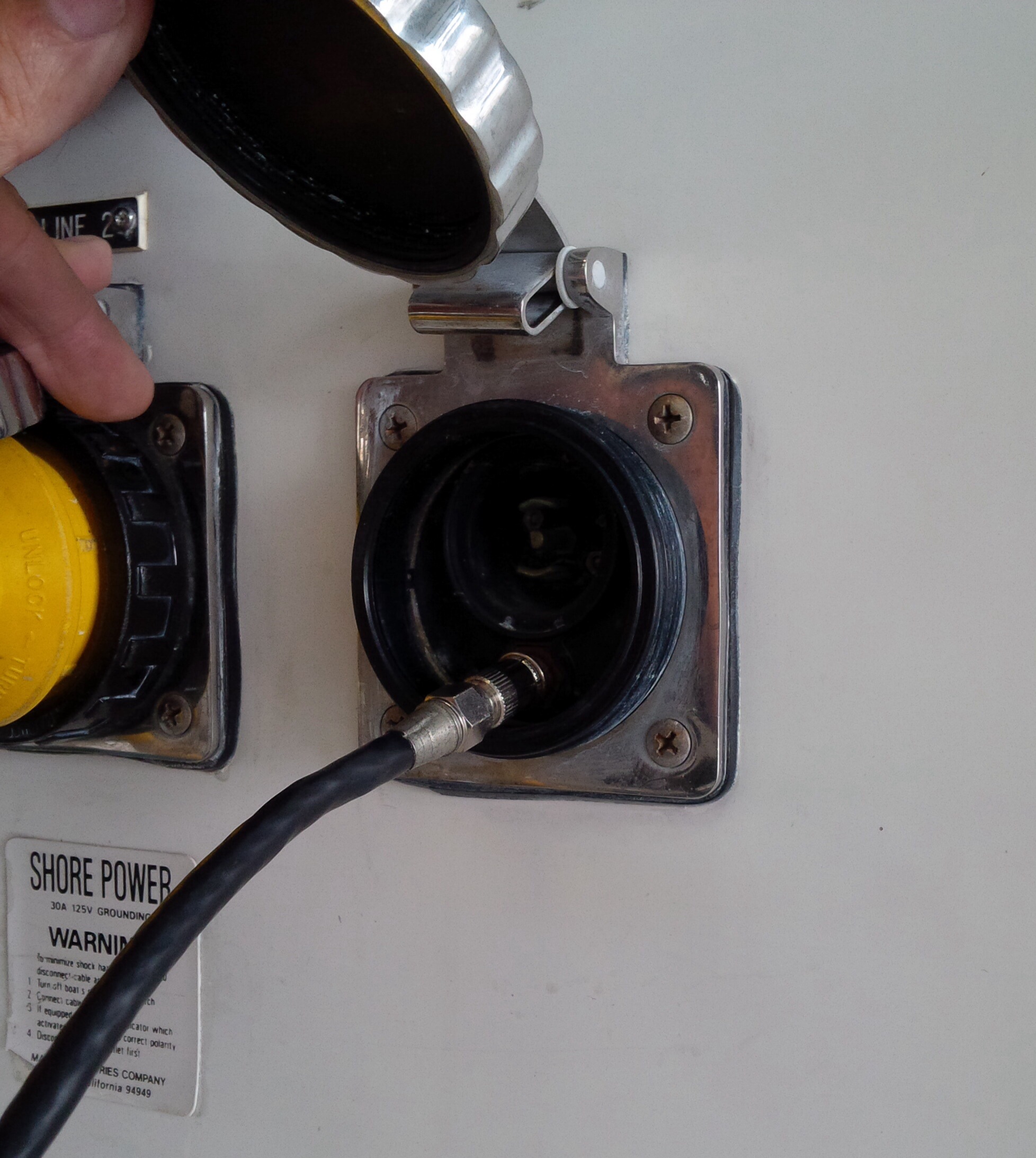
Cable Inlet

Cable Input

Back Side of Cable Input

Back Side of Cable Inlet

We confirmed that the cable inlet was functioning which was a relief as they are expensive.  We also tested each of the cables and splitter fittings in the system and boiled the source of the problem down to the cable that runs from the inlet up through the wall to the front of the boat.   Oh well. My initial guess was correct. But as you can see Molly is not impressed:
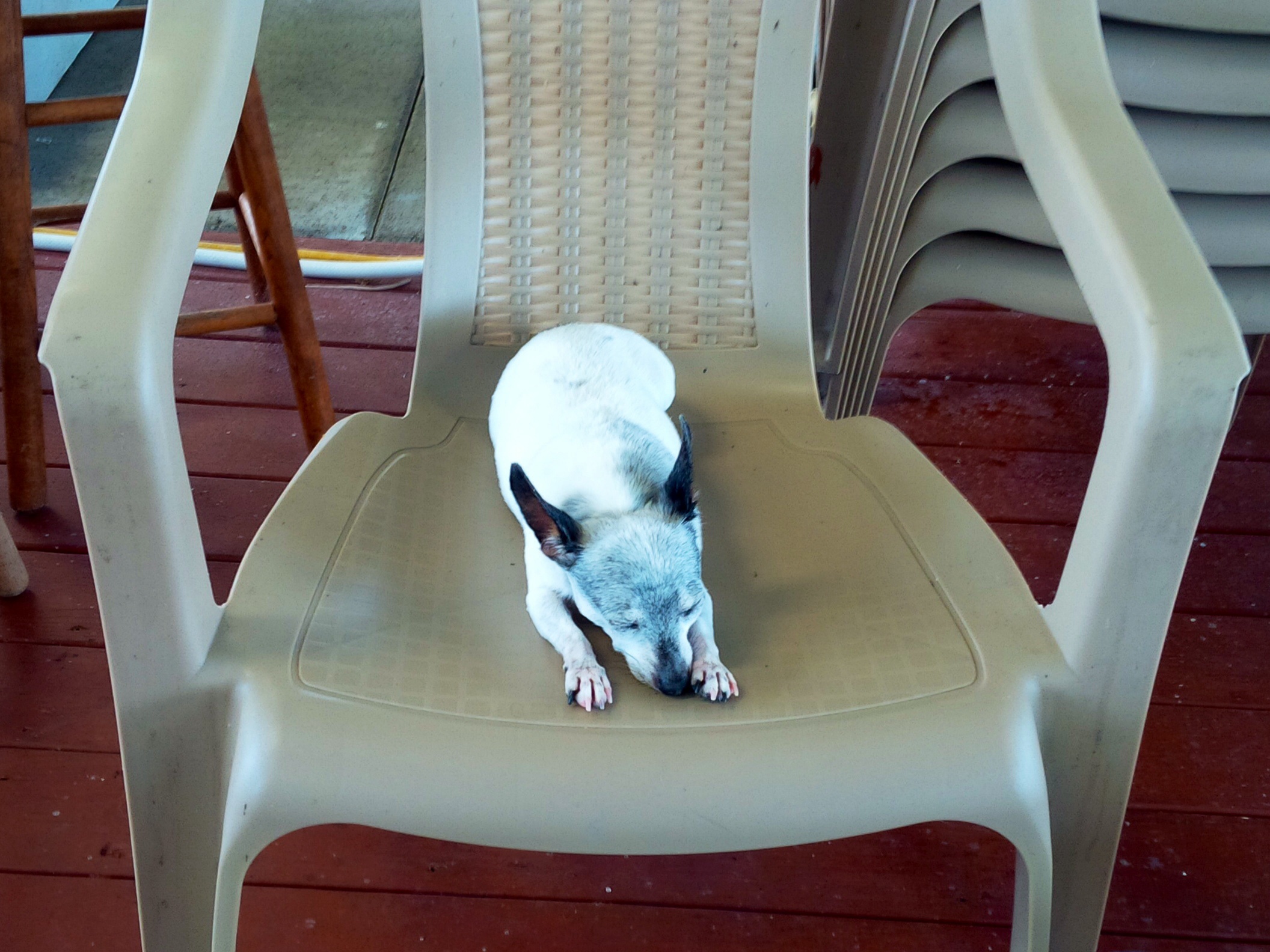
Molly Naps While We Work.

Molly Naps While We Work.

LuLu made a trip to Home Depot and purchased the best quality TV cable available.  Hey if you are going to do it, do it right.

LuLu jumped right into it and started taking the access panels off to see how we would go about routing the cable.
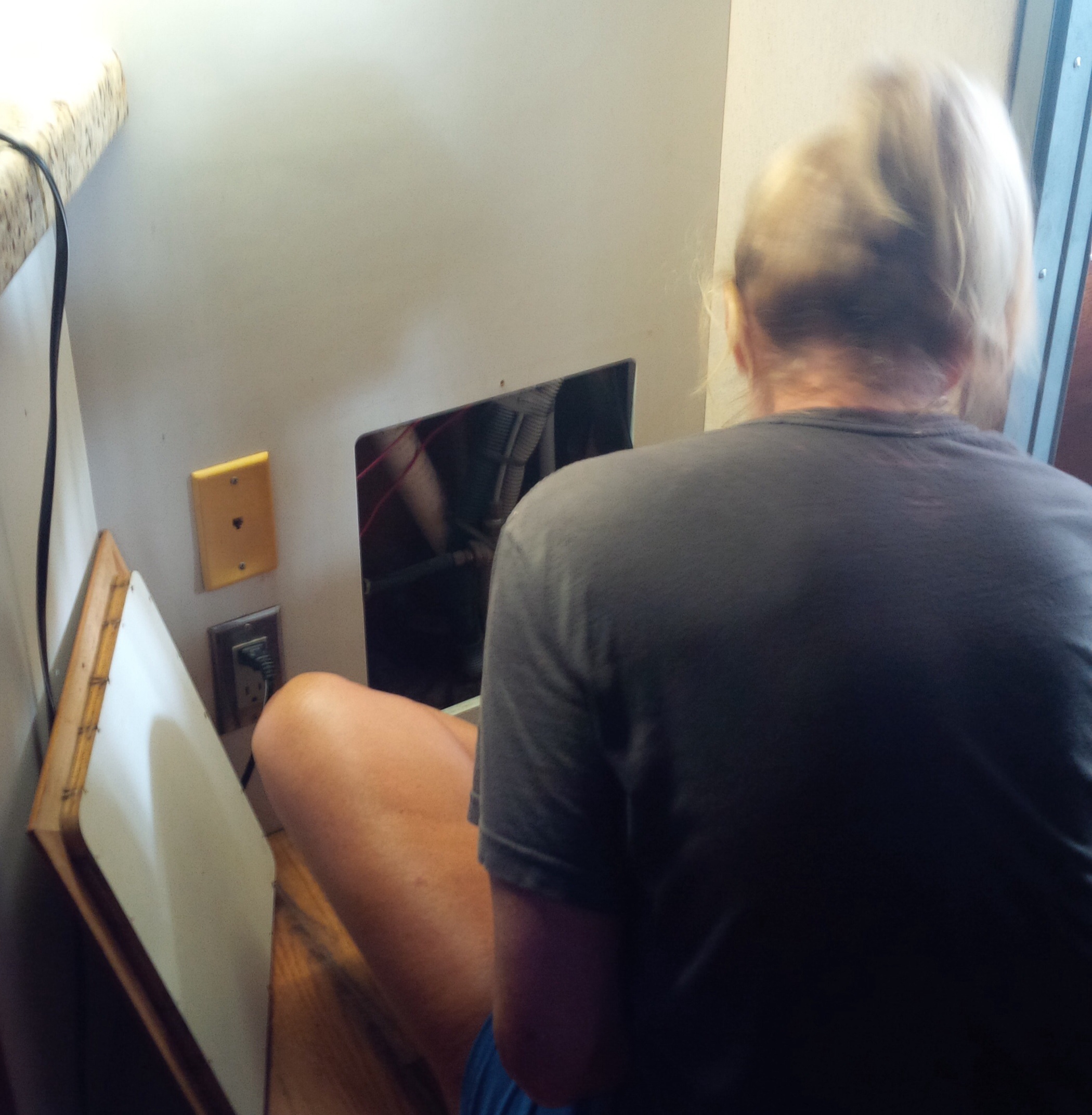
image

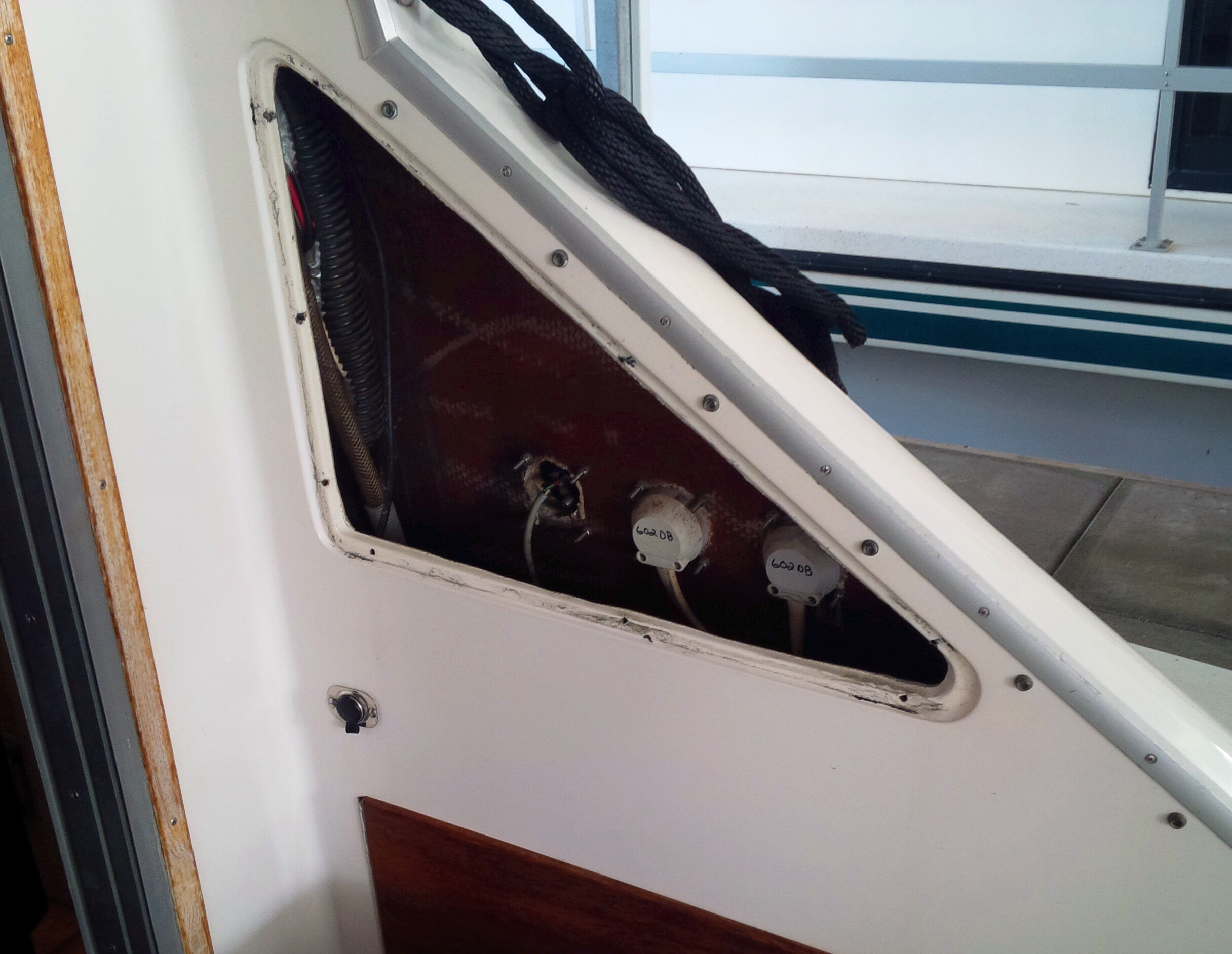
We shut off the power before we opened up the electrical panel to see about routing the cable through that area. We also removed a cabinet to give us access to the remaining pathway.
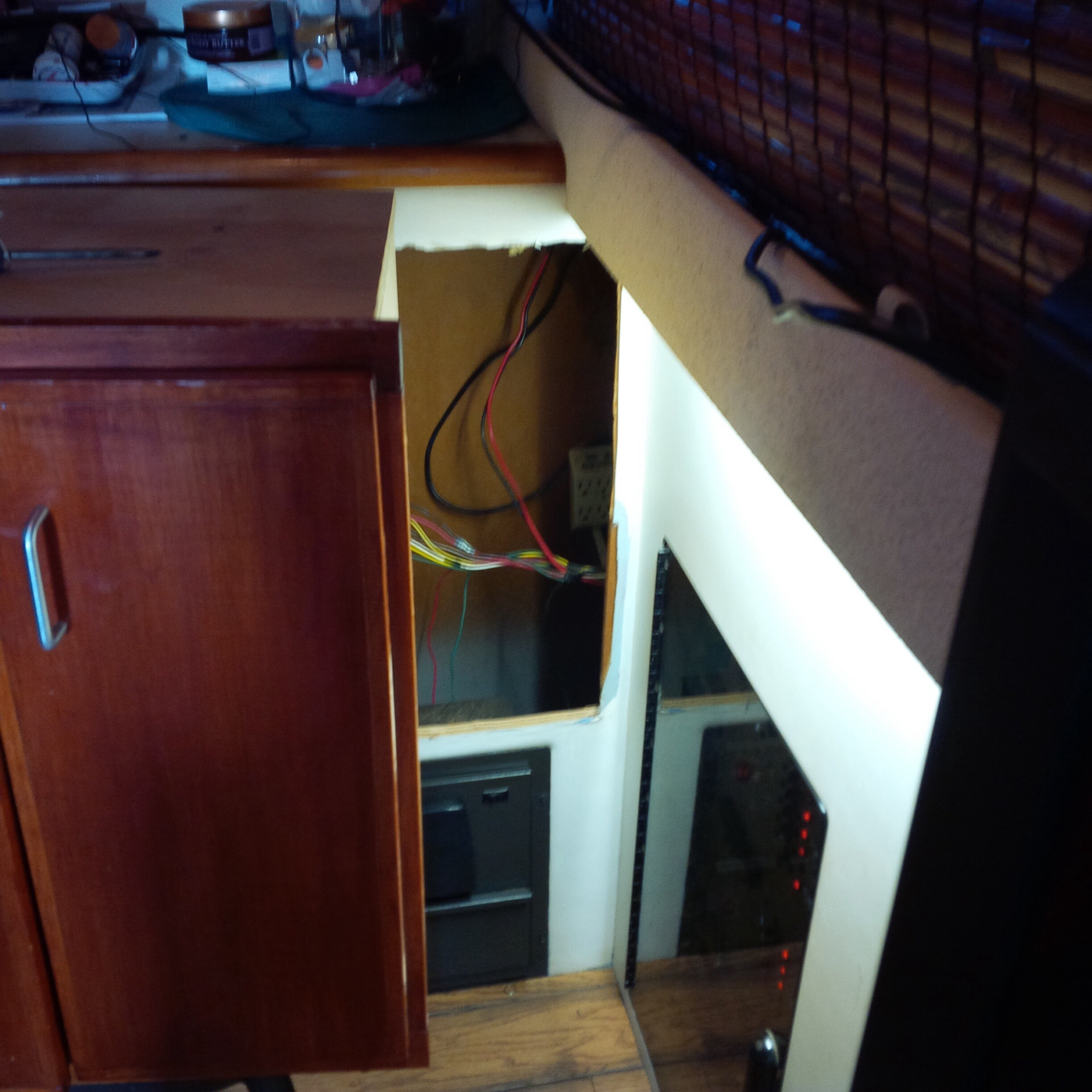
image

Looking down into the wall cavity you can see how difficult it would be to push a floppy cable through.  You can barely see LuLu’s hand way off in the dark distance.
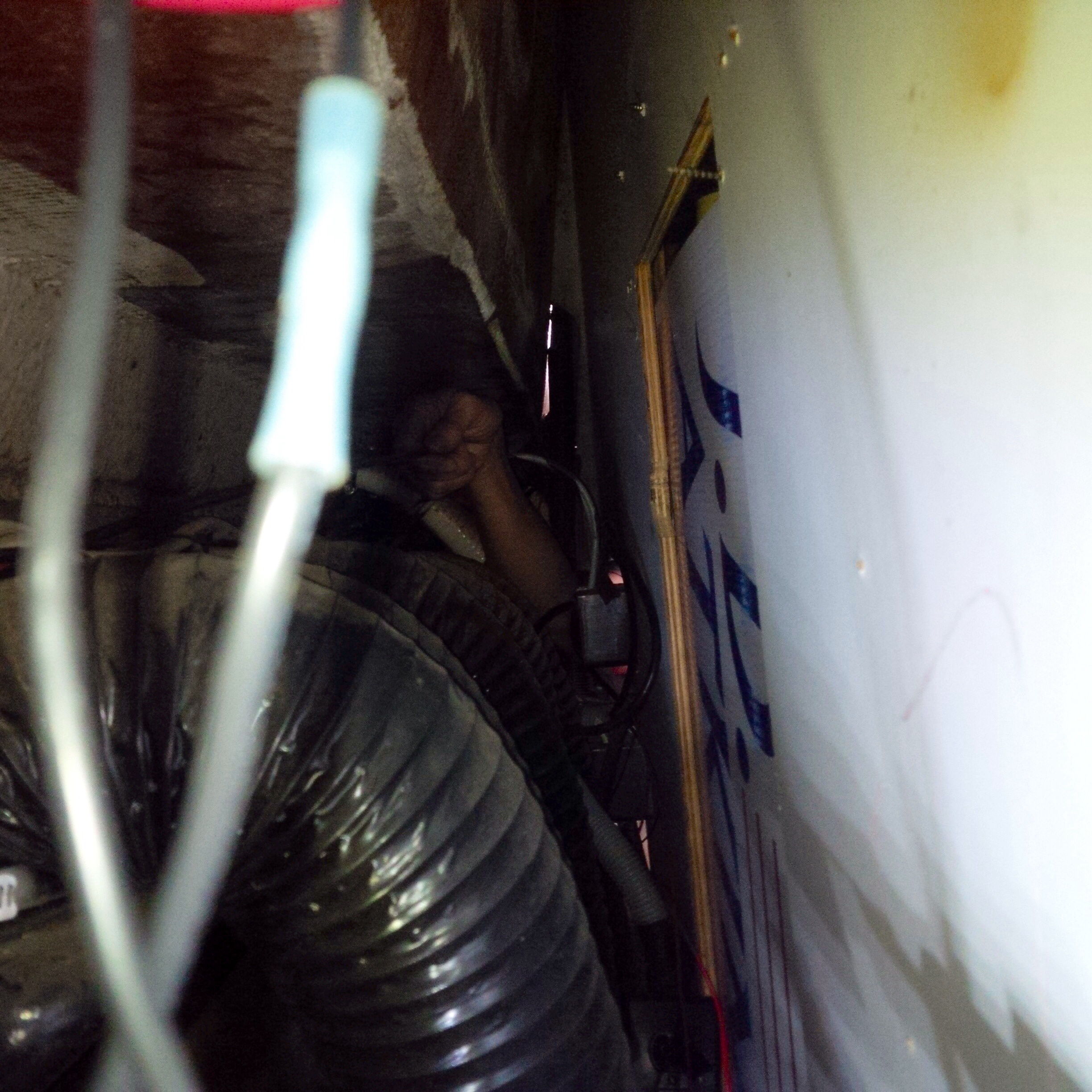
image

After a couple of tries at pushing the cable through LuLu commented that “We need a long stiff wire or something that we can snake though this maze.” “It’s interesting that you say that LuLu because they make such a thing. It is called a fish tape?  Really?  Do you have one?” Now I’m the one pouting. “No I don’t LuLu but you’re right, we sure could use one about now.” “Hey” she said, “Do you think the man next door might have one?” “I doubt it but it wouldn’t hurt to ask.” LuLu being shy like she is hops up to see and what do you know? Here he comes down the dock. “Have you got one of those fish thingies” she asks. “You know, one of those long skinny stiff wire thingies.” “Do you mean a sink drain snake?” He asks. “I have one of those that might work”. She looks back at me and I nod in the affirmative, smiling. “Has LuLu ever met a stranger?”

Well it did suffice and in no time we had that wire pulled through the maze and routed up through the next section.
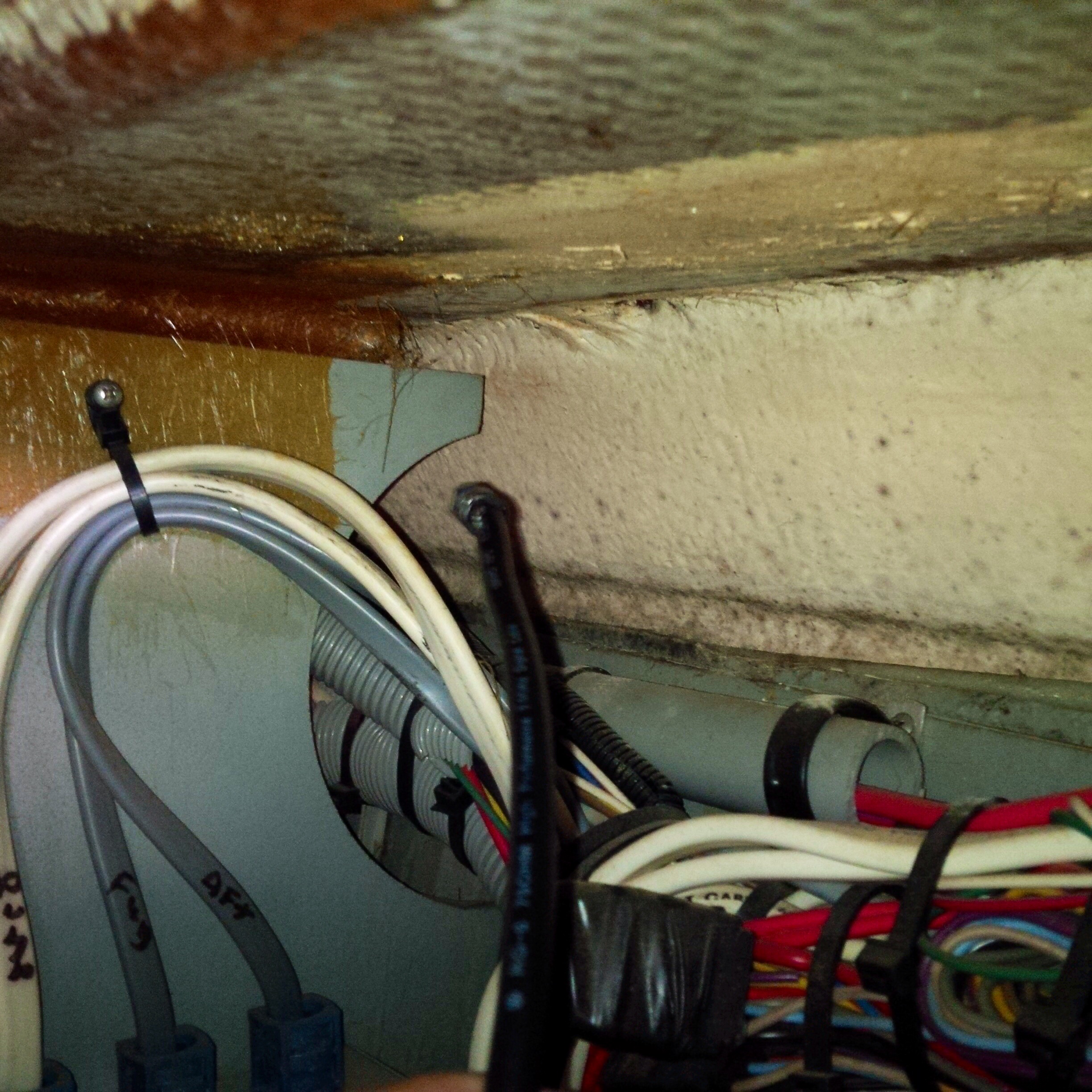
image

And then up through the top of the cabinet. SUCCESS. No more pout on this face.
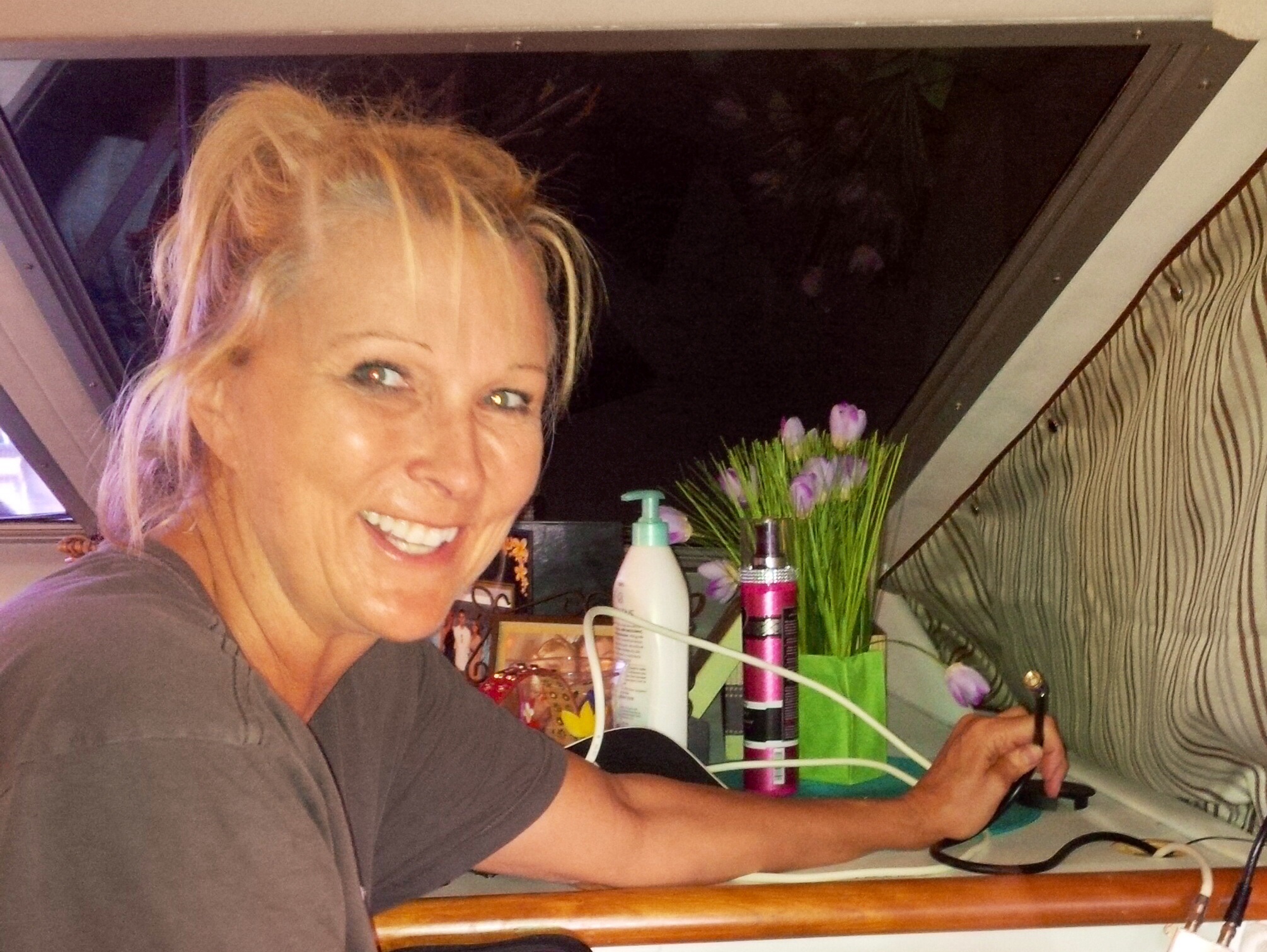
Success

Success

Even Molly was happy. “It’s time to go play”

"Yeah!!!  Our work is done and I get to go kayaking with LuLu"

“Yeah!!! Our work is done and I get to go kayaking with LuLu”

Well another Boating Lessons Learned. I gotta get myself one of these “Fishy Thingies”.

The content herein has a single theme: Mistakes …. or as I call them “Boating Lessons Learned”. While there may be elements of this site that appear to be advice about how to do some task you can be assured that it is not a complete and accurate “how to”. I am partially describing how I did something and what I learned. Do not rely on this information because Mcmanusboatworks.com makes no representations as to accuracy, completeness, correctness, suitability, or validity of any information on this site and is not liable for any errors, omissions, or delays in this information or any losses, injuries, or damages arising from its display or use. All information is provided on an as-is basis.
Posted in Boat Electrical | Tagged , , , , | Leave a comment

Boating Lessons Learned: Loose Wires

Boating Lessons Learned: Loose Wires

BLUF: When an engine is stalling intermittently from now on I will try cranking the engine and wiggling the wires to see if I can force it to stall. If it does then I my have found my problem.

I had forgotten this trick until yesterday when the local mechanic found the source of a problem that I had been attempting to solve for weeks. For me there is nothing more frustrating than an engine that runs great but stalls intermittently. How do I pin point the source of a problem when it comes and goes? Well I have to get lucky and catch it when it is in failure mode.

In this case the engine would run just fine when in the slip but if the owner took the boat out it would eventually die and not restart … at least not restart until he got the boat back in the slip. I first suspected that there was water in the tank and that when the boat was underway the rolling action caused the water to be sucked up and into the carburetor. Sure enough the fuel filter was full of mud colored water. The owner installed a new filter and ran the engine a few times checking and emptying the filter after each outing. But the intermittent stalling continued even after water was no longer showing up in the filter.

By this point the engine would often stall in the slip after only a minute or so of operation. When it would stall it sounded like it was running out of gas. It would spit and sputter and then die. Hum? Well it is not low on fuel. Maybe the float is sticking. This would allow the engine to start on the fuel that is in the bowl at start up but would eventually stall as the fuel in the bowl is used up. So I removed the flame arrester and pumped the accelerator pump a few time and sure enough … no fuel squirting means no fuel in the bowl. Well this engine sat unused for a number of years. Maybe the carb is varnished up on inside and this is causing the float needle to stick now and again. Seems reasonable. I checked the fuel pump and confirmed it was working and then removed the carb.

I love to rebuild carbs. The Holley is such a mechanical work of art. And the Carter’s that came on the old Chryslers were pretty nice too. But I hate Quadrajunk carbs. This is unfortunate because most marine gas engines are Chevy’s and most of them come equipped with a Quadrajet. So off to the carb man I went, Quadrajunk in tow and $160 later we had a nice and shiny part. The rebuilder reported that the carb was a mess inside. He was scheduled to have the rebuild complete in a couple of days but it was so gummed up that it had to soak in the cleaning solution for an extra day.

Yeah!!! We found the problem. Wrong!!! The engine did start and run great but on the first outing it stalled again when the owner attempted to bring the boat up on plane. Hum. More water in the tank? Maybe by tacking it up the water again sloshed around and was found by the fuel pick-up. This is getting old.

So after putting it off for a couple of weeks and after the generator started experiencing the same symptoms the owner decided to get his fuel tank pumped out. If water was the source of the problem this would eliminate it right away. If not then we can eliminate that possibility once and for all. And sure enough the tank had some water and trash in it but not that much. The mechanic moved on to the generator to see why it was not running. He pulled the fuel bowl off the generator carb and found that it was full of mud, same as the engine. Well clearly the contaminated fuel was a serious issue. But cleaning the tank and the carb bowl was the fix that the generator needed. The generator cranked and ran well afterwards.

But after all this work the engine was still spitting and sputtering and eventually stalling. After consulting with the boat yard owner the mechanic returned with another possible cause. Maybe it is a loose wiring connection? So he cranked the motor and proceeded to wiggle the wires to that engine. To his satisfaction when he wiggled the large wiring harness connector the engine died. Eureka!!!

image

It seems that over the years the little pins inside the connector had expanded and contracted with the heat and had worked loose. He simply had to spread the male pins a bit so they would fit more snuggle into the female connector. Problem found. Problem solved.

Boating Lessons Learned: Wiggle the Wires.

This post is for informational purposes only. The content herein has a single theme: Mistakes …. or as I call them “Boating Lessons Learned”. While there may be elements of this site that appear to be advice about how to do some task you can be assured that it is not a complete and accurate “how to”. I am partially describing how I did something and what I learned. Do not rely on this information because Mcmanusboatworks.com makes no representations as to accuracy, completeness, correctness, suitability, or validity of any information on this site and is not liable for any errors, omissions, or delays in this information or any losses, injuries, or damages arising from its display or use. All information is provided on an as-is basis.
Posted in Boat Electrical | Tagged , , , | Leave a comment

Boating Lessons Learned: Calling the Lock

Boating Lessons Learned: Calling the Lock.

BLUF: I find that the locking through process goes more smoothly if I:

– call the lock early
– be patient and polite
– employ professional radio techniques

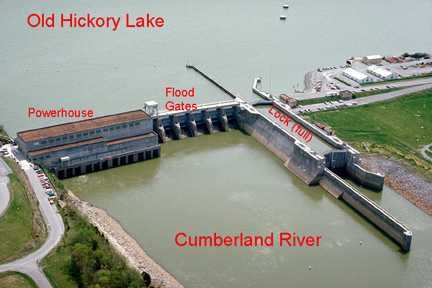
Source:  US Army Corps of Engineers

Source: US Army Corps of Engineers

I find that it is a good idea to contract the lock as early as possible to find out the status of the lock and if any higher priority traffic is pending. If the lock will be busy for a couple of hours and there is no high priority traffic on the way then I slow down and conserve fuel or I try to find an interesting cove in which to explore away the time. This is particularly true if there is no safe location to moor in the immediate vicinity of the lock. But the order of precedence for lockage is set when I arrive at the arrival point so the sooner I arrive at the lock the sooner I am placed in the que. The priority for passage through the locks is as follows:

– U.S. Military Craft
– Commercial Passenger Vessels
– Commercial Tows
– Commercial Fishermen
– Recreation/Pleasure Craft

Sometimes small craft are required to wait and lock through with other craft. It is rare for the lock operator to allow pleasure craft to lock through along side commercial traffic due to the risks involved.

On occasion I have called the lock by phone to check on the status. This link has phone numbers for the locks on the Tennessee River. A number of factors can cause significant delay. Commercial traffic can really back up if the main lock is out of commission for maintenance.

It pays to be patient and polite with the lock operator. A few years ago I got a chance to interview a lock operator and when I asked what frustrates him the most he answered “a boater that fails to follow instructions or gets angry at having to wait.” It is the operator’s mission to do everything they can to lock me through as quickly as possible while working safely and within the regulations. He has no control over the amount of traffic or the speed at which the traffic locks through. He also has no control over locking priorities. But he does have some latitude. I have had the operator work me in between commercial traffic when the delay would otherwise be many hours. But he will only do so if he feels I can do it safely. If the entrance of the lock is congested with large commercial vessels it can be a tricky maneuver and the operator must make a judgment call whether he feels I can safely execute the operation. If I do have to wait for an extended period of time I ask the operator’s advice concerning where to safety await passage. The area below and above the lock is fraught with danger particularly below the lock where the channel is narrow and the current is swift. Sometimes the operator will offer suggestions but there are few good choices and he may choose to leave me to my own devices. The outcome of all this depends a great deal on the operator and his willingness to help so I find that it pays to be patient with and polite to the lock operator. My locking experience is more pleasant and the lock operators job is much easier that way.

Before I make the call to the lock operator I estimate my time of arrival. I call the lock operator on VHF channel 16 and address the lock operator by the name of the lock as I would address another boat. The operator generally responds by asking me to switch to either channel 14 or 13. A typical initial call goes as follows:

Boater – “Pleasure boat JUMA calling Guntersville Lock on channel 16.”

Lock Operator – “Guntersville Lock back to station calling, switch to channel 14 please skipper.”

Boater – “Switching to 14”. Both parties then switch channels followed by

Lock Operator – “Guntersville Lock back to station calling”

Boater – “Yes sir, I wish to lock through going downstream and expect to be at your upstream arrival point at 10:30”

Lock Operator – “I must fill the lock which will take about 20 minutes. Call me again when you reach the arrival point.”

Boater – “Thank you Sir. JUMA clear and standing by on Channel 16.”

Lock Operator – “Guntersville Lock clear.”

That’s about it. Is pretty simple but there are a few things to note about the interchange:

– I take the time to accurately estimate my arrival time and share that with the operator. For me this is a matter of integrity. I want the lock operator to trust my input and make sound lockage priority decisions. If he decides to hold the lock waiting for me and possibly delay the progress of other traffic then I want to hold up my end of that bargain.
– On my initial call I referred to myself as “pleasure boat JUMA”. That gives the lock operator the information he needs to determine lockable priority.
– I include the name of the lock in the call. I do this because in some areas there is more than one lock within transmission range of my radio. It doesn’t do me much good to have the wrong lock prepare for my arrival.
– I told him I was calling on channel 16. I do this because he monitors a number of channels and by telling him what channel I am calling on it eliminates any confusing that may leave me hanging on one channel while he returns my call on another.
– There is an unspoken protocol concerning who calls whom. Of course I made the initial call to the lock but during the course of the interchange the lock operator took the lead and directed me to switch to channel 14. So I switch to 14 but await his return call. By following this protocol I don’t jump the gun and talk over his return transmission.

Boating Lessons Learned: Call Early, be patient and polite, and employ professional radio techniques.

The content herein has a single theme: Mistakes …. or as I call them “Boating Lessons Learned”. While there may be elements of this site that appear to be advice about how to do some task you can be assured that it is not a complete and accurate “how to”. I am partially describing how I did something and what I learned. Do not rely on this information because Mcmanusboatworks.com makes no representations as to accuracy, completeness, correctness, suitability, or validity of any information on this site and is not liable for any errors, omissions, or delays in this information or any losses, injuries, or damages arising from its display or use. All information is provided on an as-is basis.
Posted in Navigation | Tagged , , | Leave a comment

Boating Lessons Learned: How a Navigation Lock Works

Boating Lessons Learned: How a Navigation Lock Works

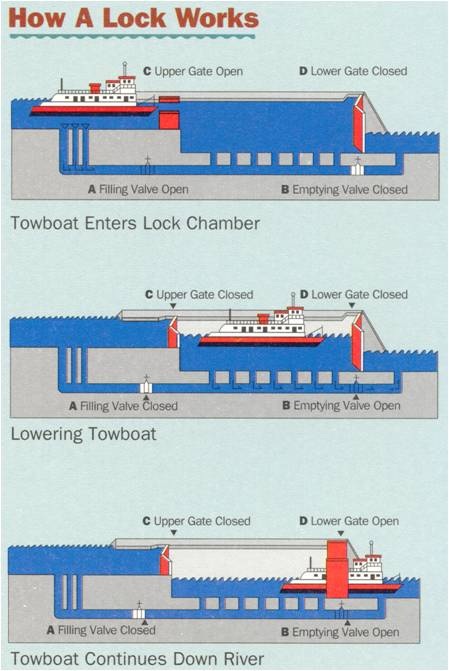
The lock is the river’s equivalent of an elevator that transfers a vessel from one side of a dam to the other. A lock consists of a concrete chamber with gates on either end. The size of the lock chamber varies from dam to dam but is typically 110 feet wide with lengths varying from 300 to 1000 feet.

Source:  US Army Corps of Engineers, Nashville District

Source: US Army Corps of Engineers, Nashville District

The lock chamber is filled and emptied of water by gravity and/or pump driven flow through a conduit system connecting the chamber to the upper and lower side of the dam. The conduits run under and along either one or both sides of the lock. They are large concrete tunnels with a cross section of approximately 12 feet square containing large valves that control the flow of water in and out of the chamber. The water flows up into the chamber through holes located below water level at the base of the lock wall like filling a bath tub from underneath.

Source:  US Army Corps of Engineers

Source: US Army Corps of Engineers

The lockage process begins with both gates closed. The lock operator opens the filling valve to allow water to enter the chamber. As the height of the water in the chamber approaches the height of the water above the dam, the water flow gradually slows down until the water levels equalize. The lock operator will then open the upper gate to allow the vessel to enter the lock. After the vessel is securely moored to floating moorings along the chamber wall, the operator will close the upper gate and open the emptying valve. The water is drained by gravity out of the chamber until the level of the water in the lock chamber equalizes with the level of the water below the dam. The lock operator will then open the lower gate allowing the vessel to exit the lock chamber. The process of filling and emptying the chamber will take between 30 and 40 minutes. Since the length of the lock is often too small to accept all the barges pushed by a towboat, the barge must splits into two or more sections. It may take 2½ hours or more to move a large towboat load through a typical lock.

I found an interesting simulator that allows the user to virtually operate a lock and get some sense of what goes on up in the lock operators control room. I apologize up front … for some reason it works on my Dell but not on my iPad but it is interesting so I figured I would share it anyway. Good luck.

For more information and to take a virtual tour you can visit this website maintained by the US Army Corps of Engineers, Nashville District.

OH. And thanks to all of you that have entered AMAZONthrough my blog and made purchases. It costs you no more to enter through my blog but when you do I receive a small percentage and it adds up. THANKS.

This post is for informational purposes only. Mcmanusboatworks.com makes no representations as to accuracy, completeness, currentness, suitability, or validity of any information on this site and will not be liable for any errors, omissions, or delays in this information or any losses, injuries, or damages arising from its display or use. All information is provided on an as-is basis.

Posted in Navigation | Tagged , , | Leave a comment

Boating Lessons Learned: Shop Global, Buy Local

Boating Lessons Learned: Shop Global, Buy Local

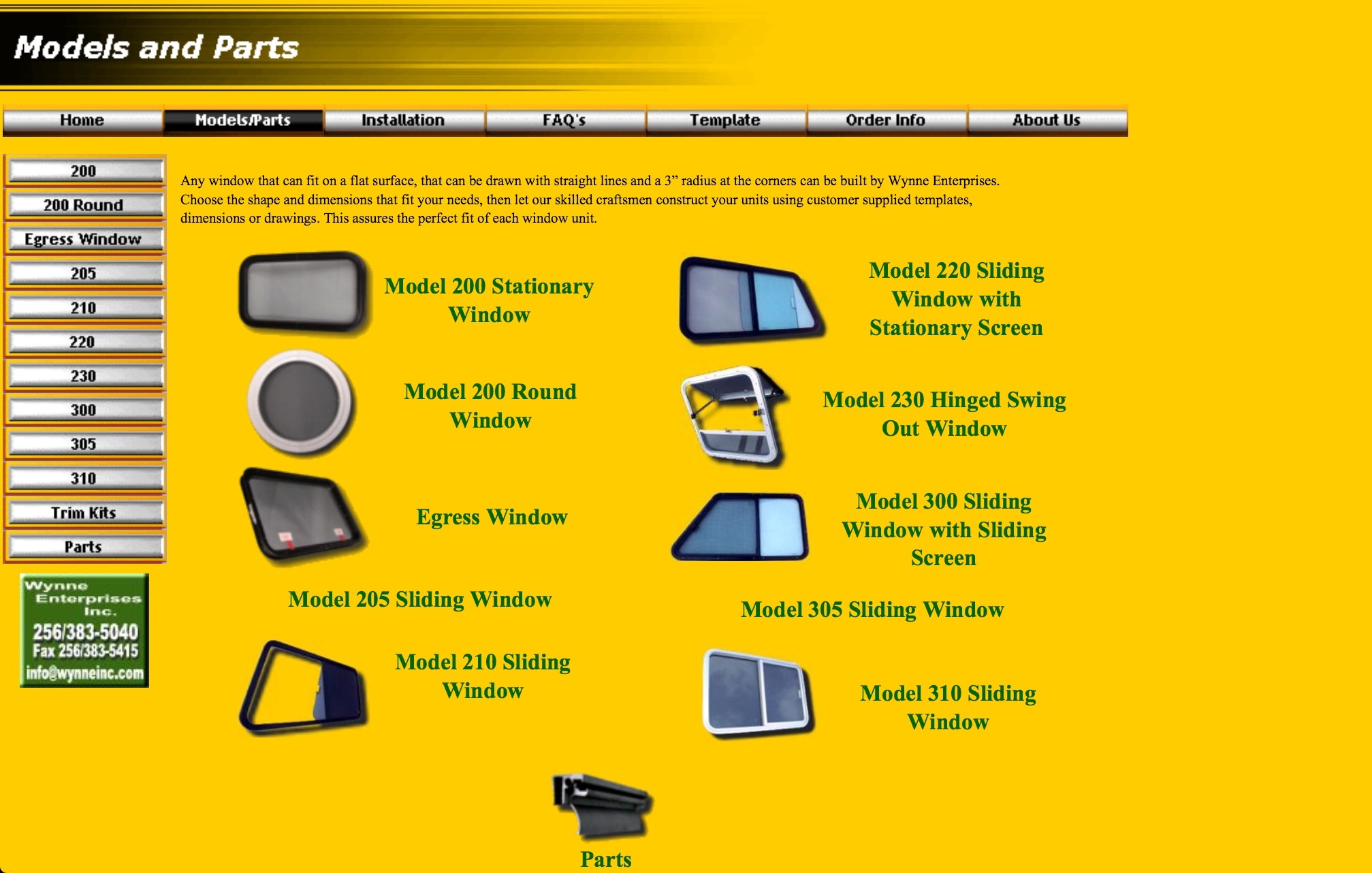
BLUF: I recently used Pinterest to shop far and wide for a custom marine window manufacturer and happened to find one right here in my back yard.

Wynne Enterprises, Inc

Wynne Enterprises Inc. was founded in May of 1973 and has grown from its initial 3,000 sq. ft. rented facility to a large modern 60,000 sq. ft. of production and warehouse area, located on 5 acres in Tuscumbia, Alabama.

Wynne Enterprises

When I called the folks over at Wynne I was greeted by a knowledgeable and friendly staff who helped me through the selection and design process. The quote they gave me for the window was very competitive and since they were local I was able to just drive over and pick up the window. My trip to their plant was enjoyable. They took time to show me the features of the window and to give me some pointers on installation.

When I got the new window to the boat I found that I had not measured the bulkhead thickness correctly so there was about a 1/2″ gap between the clamp ring and the window frame. I measured the bulkhead with the old window still mounted in place so I was not able to see that the welds at the corners of my window rough opening effectively made the wall thicker. So I called Brad to discussed my options. He was very helpful and after considering the pros and cons I opted to order a thinner clamp ring. They must have given it to me at cost as it was only $40 and they had it ready in only two days.

All in all it was a really good experience and by shopping globally I was pleasantly surprised to find a world class manufacturer right here in my own back yard. Had it not been for the web I would have never found them and experienced another Boating Lessons Learned.

OH. And thanks to all of you that have entered AMAZONthrough my blog and made purchases. It costs you no more to enter through my blog but when you do I receive a small percentage and it adds up. THANKS.

The content herein has a single theme: Mistakes …. or as I call them “Boating Lessons Learned”. While there may be elements of this site that appear to be advice about how to do some task you can be assured that it is not a complete and accurate “how to”. I am partially describing how I did something and what I learned. Do not rely on this information because Mcmanusboatworks.com makes no representations as to accuracy, completeness, correctness, suitability, or validity of any information on this site and is not liable for any errors, omissions, or delays in this information or any losses, injuries, or damages arising from its display or use. All information is provided on an as-is basis.

Posted in Boat Structural | Tagged , , , | Leave a comment

Boating Lessons Learned: Marine Battery Charger Failure

Boating Lessons Learned: Marine Battery Charger Failure

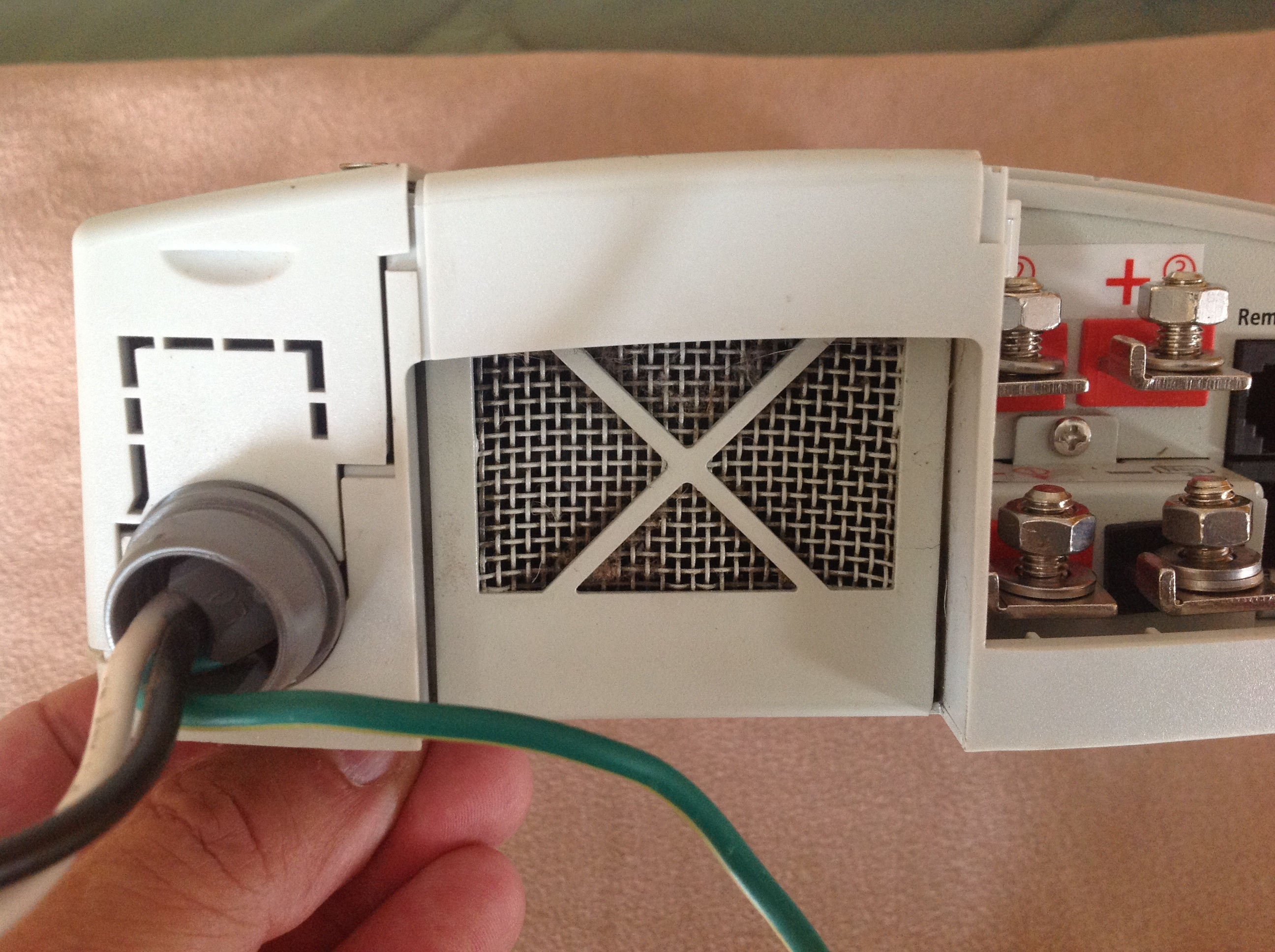
A couple of weeks ago a friend asked for my help. Her marine house batteries were dead leaving her without functioning DC systems. Bottom Line Up Front: Her expensive marine battery charger was shot. Upon closer inspection I found that the cooling air inlet to the charger was blocked with dust and debris. While I can not be sure I think that it is reasonable to expect that this was the root cause of the failure.

Blocked Cooling Air Vent

Blocked Cooling Air Vent

Unfortunately I removed most of the lint from the vent prior to taking this photo but you get the idea. I have seen this cause of failure 3 times in the last year. Many of these expensive solid state chargers rely on a pancake fan drawing air through a small opening to cool the electronics. The life of these $300-$400 chargers depends on a $3-$4 fan. When the fan dies or the inlet gets blocked with dust and lint the charger is not long for this world.

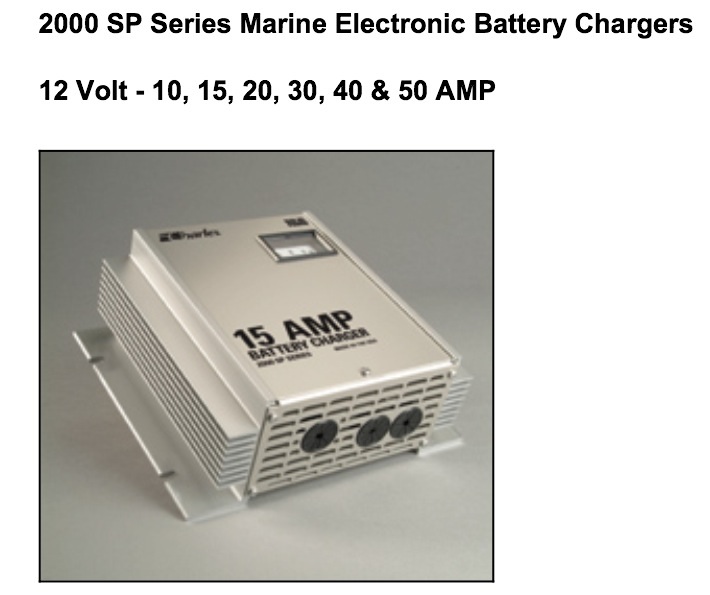
The location of her charger made it susceptible to a repeat of the problem so I sought a replacement charger that had passive cooling thereby not relying on a fan. I found this relatively inexpensive but good quality unit from Charles Industries. It is made in America and I have found Charles Industries to be the kind of company that I like to work with. Every time that I have called them I am greeted by knowledgable people who readily provide sound technical advice. I bought the 20 amp version because this model relies totally on the aluminum fins for cooling …. no fans to die or vents to block.

Charles Industries Marine Battery Charger

Charles Industries Marine Battery Charger

In this photo I have yet to complete the installation and tidy up the wiring but you can see that while this unit is in a good location for protection against heat and the weather that it is exposed to the dust and lint that falls into this compartment through the cracks around the hatch above.

Installation in progress.

Installation in progress.

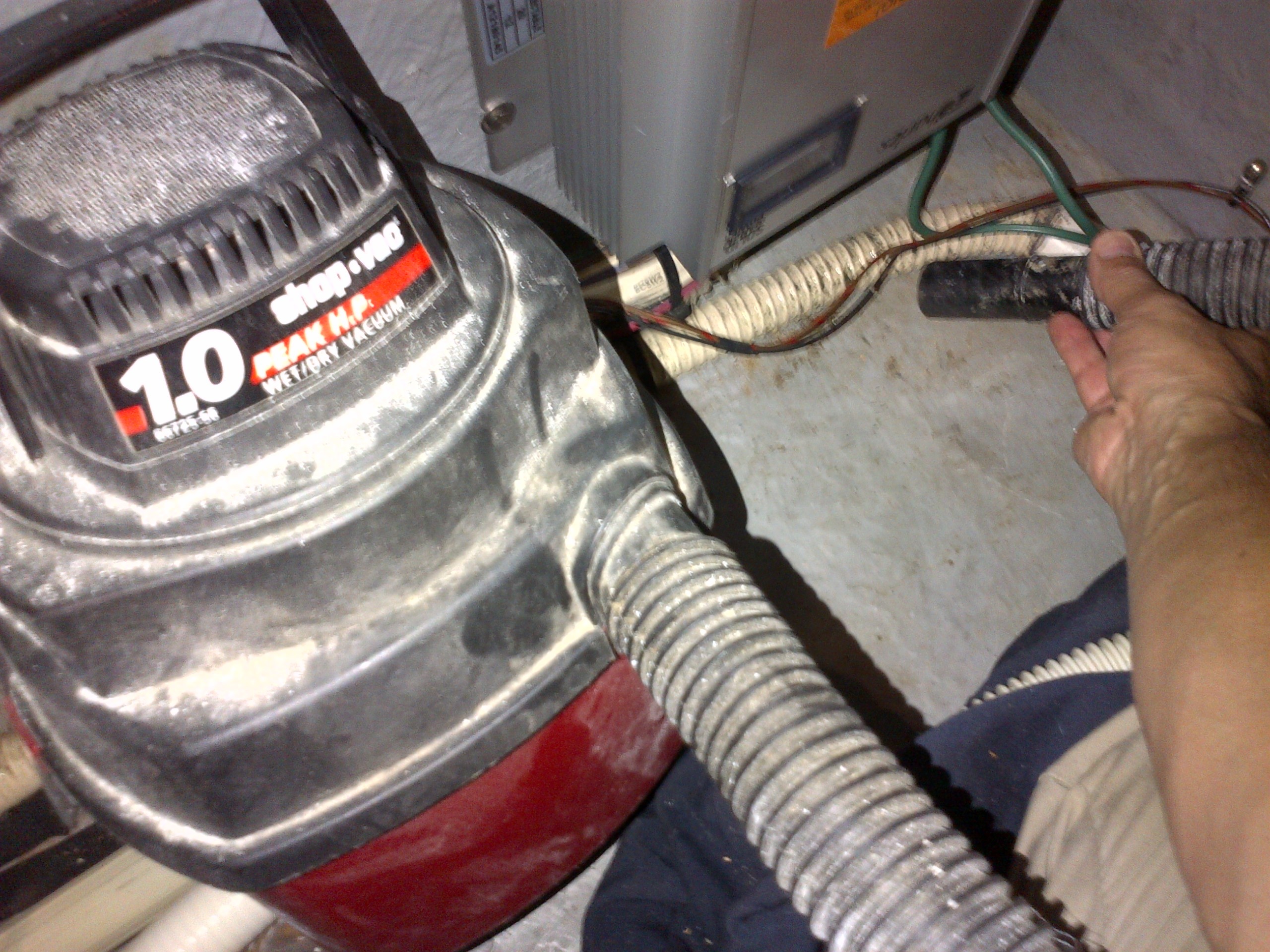
I had to do some drilling to mount the unit to the wall so I cleaned up my mess with a small shop vac. I do not like to leave trash in the bilge area that over time might find its way down and into the bilge pump. What a shame it would be if a boat sank because the pump jammed up with shavings that I had left behind.

image

The new unit is up and running now with no complaints. All in all I would say that these are just more in a long line of Boating Lessons Learned.

OH. And thanks to all of you that have entered AMAZONthrough my blog and made purchases. It costs you no more to enter through my blog but when you do I receive a small percentage and it adds up. THANKS.
The content herein has a single theme: Mistakes …. or as I call them “Boating Lessons Learned”. While there may be elements of this site that appear to be advice about how to do some task you can be assured that it is not a complete and accurate “how to”. I am partially describing how I did something and what I learned. Do not rely on this information because Mcmanusboatworks.com makes no representations as to accuracy, completeness, correctness, suitability, or validity of any information on this site and is not liable for any errors, omissions, or delays in this information or any losses, injuries, or damages arising from its display or use. All information is provided on an as-is basis.

Posted in Boat Electrical | Tagged , , , , , , , , , , | Leave a comment

Boating Lessons Learned: Marine Window Replacement, Sealant Removal

Boating Lessons Learned:  Marine Window Replacement, Sealant Removal.

Well another weekend has passed bringing with it more Boating Lessons Learned.  Bottom Line Up Front – Power sanding tar based sealants makes a HUGE MESS.  Expletives Deleted. But Simple Green saved the day.

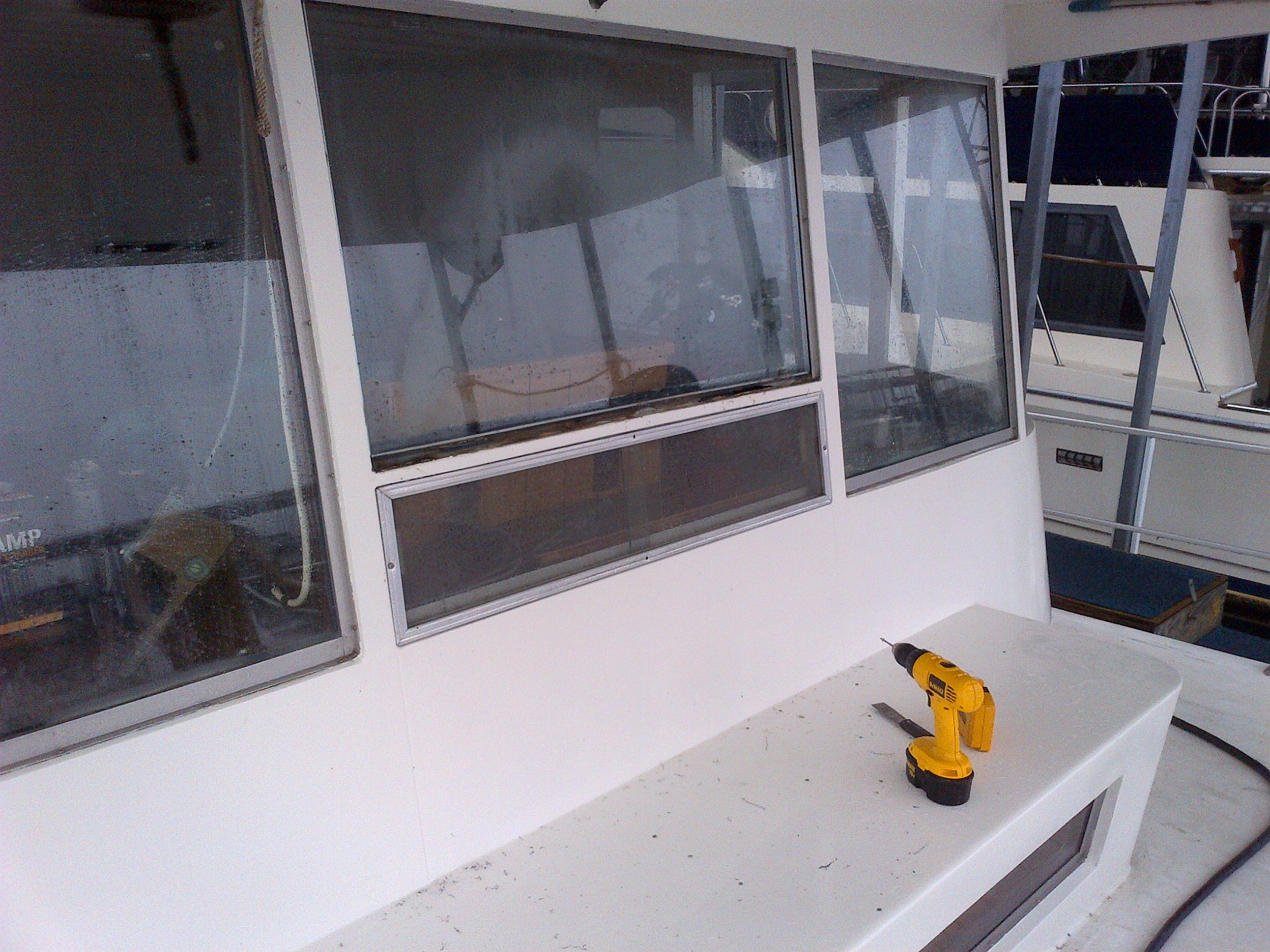
Pilot House Window Replacement

Pilot House Window Replacement

The job of replacing the pilot house window started out easy enough.  Drill out the rivets, remove the trim pieces, cut loose the silicone caulking, gently push out the window into the ready hands of a helper.  From there it went down hill.

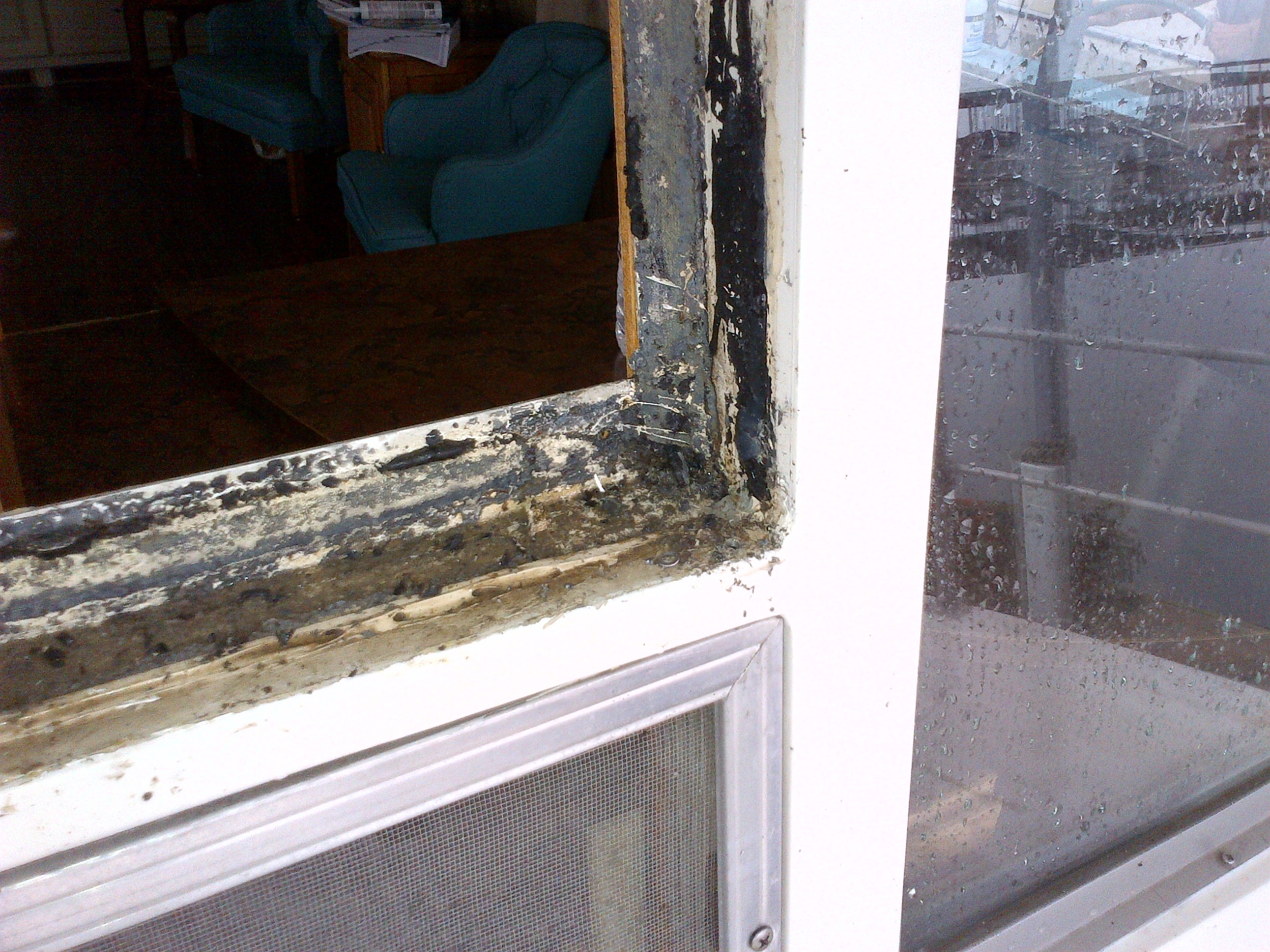
Asphalt Based Window Sealant

Asphalt Based Window Sealant

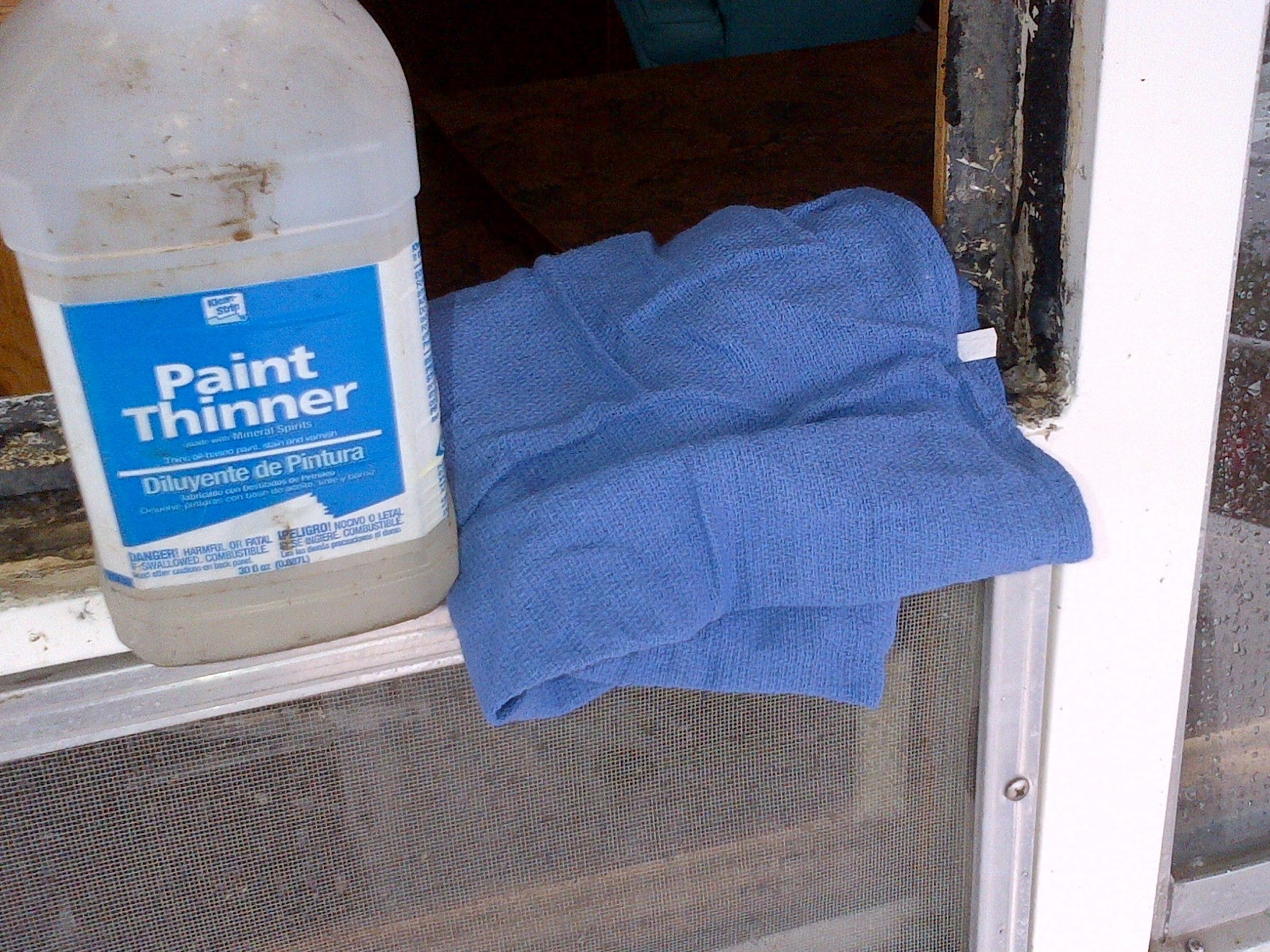
As you can see in the photo the window was bedded in an asphalt based window sealant.   I scraped off as much as I could and then attempted to use mineral spirits to remove the dry and crusty residue.

Marine Window Replacement

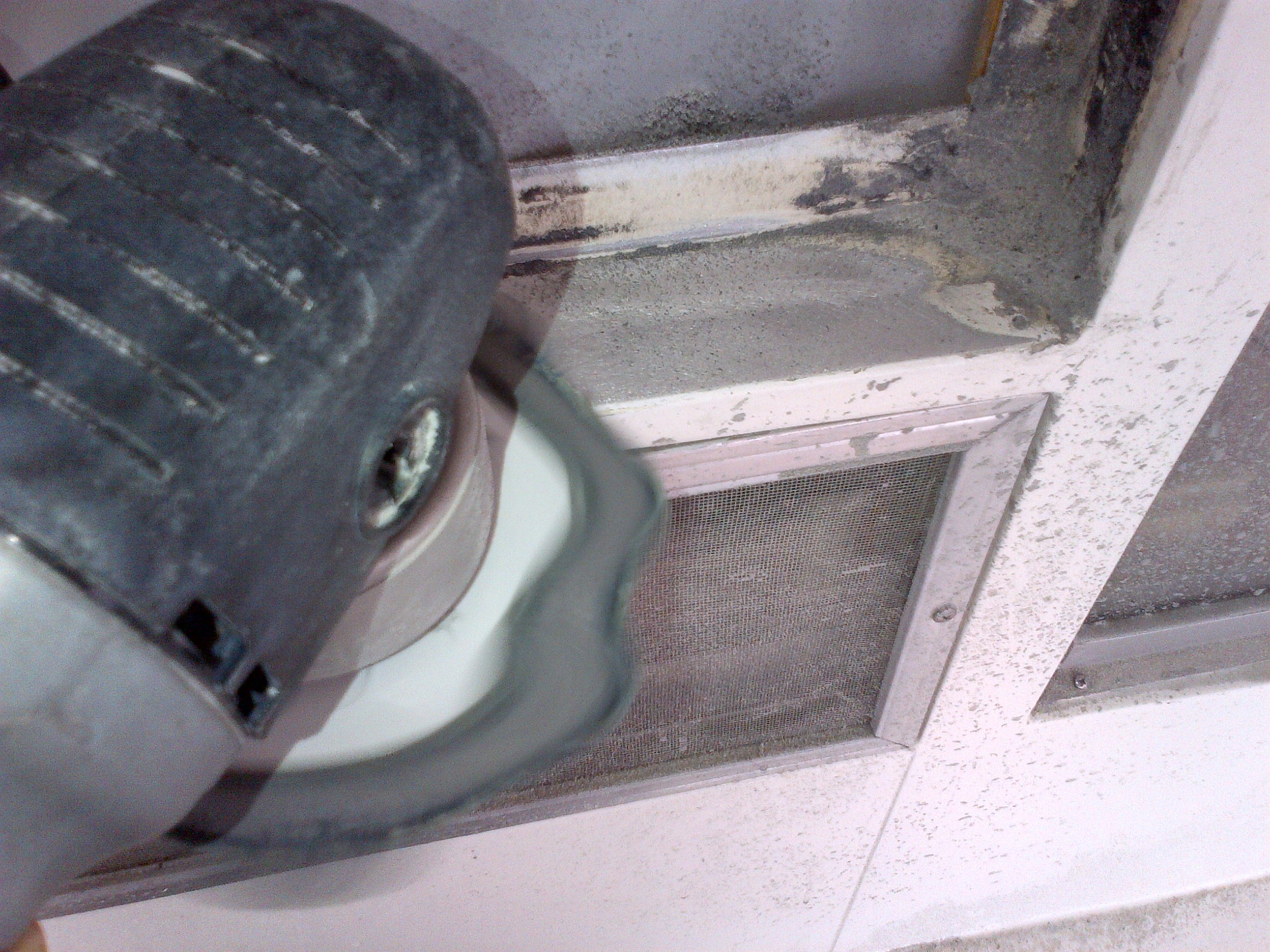
The sealant was so dried out and crusty that I made no headway at all using mineral spirits.  So I got out my power sanders.  First I tried my 9″ disk sander with a 50 grit pad.  Wow.   Way too aggressive.  I know … I know.   You saw that coming.  It removed the sealant but quickly cut grooves in the aluminum.  But in my defense the disk sander is working very well in removing the thick latex paint from the deck.  But then again the deck is a large flat surface and I can easily control the pressure the disk is applying to the surface.  Sanding the narrow window rabbet was a different story altogether.  So I switched to my orbital sander with a 60 grit disk.

Porter Cable Random Orbital Sander, Variable Speed.

Porter Cable Random Orbital Sander, Variable Speed.

This tool worked like a champ.  It quickly removed not only the tar but the other sealants that were pin place.  But little did I know I was making matters much worse.  Sanding was converting all of that dry and crusty tar into a fine and sticky dust.  It stuck to everything.  The picture above and below do not do it justice but suffice to say that the entire front deck was speckled with tiny spots of tar.

Tar Spots All Over The Boat

Tar Spots All Over The Boat

I tried wiping and washing.  Nothing!!!!   I tied mineral spirits.  It smeared the now dissolved tar all over my shiny white paint.  I gave up, grabbed a cold drink, and plopped down in my moaning chair …. dejected.   Then around the corner came the answer, a dock mate carrying a big jug of Simple Green. It is available in the cleaning supply section of my local Home Depot and most likely at the other big box stores. My Bud splashed some on the mess, let it sit for a couple of minutes, and I could see the tar spots beginning to melt away. A couple of more minutes and some scrubbing and the mess began to wash away. Wow Again! This stuff works. He tells me Simple Green has the same effect on spider droppings also. What a find. And to think I washed boats to earn spending money as a kid and figured I knew all there is to know about boat washing. Well I guess I experienced another Boating Lessons Learned.

OH. And thanks to all of you that have entered AMAZONthrough my blog and made purchases. It costs you no more to enter through my blog but when you do I receive a small percentage and it adds up. THANKS.

The content herein has a single theme: Mistakes …. or as I call them “Boating Lessons Learned”. While there may be elements of this site that appear to be advice about how to do some task you can be assured that it is not a complete and accurate “how to”. I am partially describing how I did something and what I learned. Do not rely on this information because Mcmanusboatworks.com makes no representations as to accuracy, completeness, correctness, suitability, or validity of any information on this site and is not liable for any errors, omissions, or delays in this information or any losses, injuries, or damages arising from its display or use. All information is provided on an as-is basis.

Posted in Boat Structural | Tagged , , , , , , | Leave a comment

Boating Lessons Learned: A Sharp Knife

Boating Lessons Learned: A Sharp Knife. I am embarrassed to admit it but I have never been able to sharpen a knife. It was so bad that when I bought a new knife I would hesitate cutting anything knowing that once I lost that sharp edge I would never get it back. Sad Huh? Well this week I experienced another Boating Lessons Learned and now I can do a passable job at restoring a sharp edge. Bottom Line Up Front:

– I bought an inexpensive stone at Home Depot that is large and has a course grit on one side and medium grit on the other. I also bought some 2000 grit sand paper in the auto department at Walmart.
– I blackened the edge with a permanent marker so I could see where I was honing. This allowed me to adjust my hold and stroke as necessary. This intel was HUGE!
– Safety First. I stroked the knife backwards dragging the blade with the edge trailing so I was less likely to slip and slice a body part with the edge. As with all boating tasks there is an element of risk. If you are not willing to be totally responsible and be held fully accountable for the outcome then turn to a professional and pay them to take on that responsibility for you.
– I soaked the stone in water for a few minutes then dipped it in water now and again to free up clean abrasive.
– I disregarded the existing blade angle, held the knife at an angle that felt natural to me, and I honed away with the course stone till I replaced the entire old edge with my new edge angle.
– Once I was sure the edge was as sharp as the course stone would take it I moved to the medium grit and repeated the process. I finished it off by doing the a same with the 2000 grit sand paper laid flat on a board.

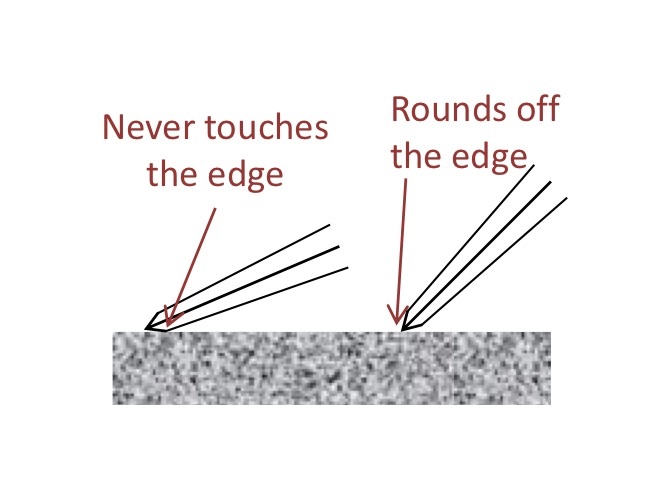
All of the instructions I have ever read said something to the effect that I should hold the knife at a 25 degree angle to the stone and alternately hone back and forth 10 or so stokes on each side and WALLA the blade is sharp. Hum, 25 degrees you say? Recon how I am supposed to know what 25 degrees looks like? Alternately the instructions have said to hold the blade at the existing blade edge angle. Even with my best reading glasses on I could not tell what angle my existing edge was nor could I somehow lay the blade down on the stone and peek under there to see if I was holding the blade at the correct angle. So I am 100% sure that never in my life have I ever held the knife anywhere close to the existing blade angle. Because I was unsure about what I was doing I was tenative and only stroked the blade a few times before giving up. The result is that I have never been able to sharpen a knife. I imagine my efforts looked something like this:

Boating Lessons Learned

But this weekend I had some time on my hands so I thought I would try again. The knife I was sharpening had no edge at all so there was nothing to lose if I screwed up. It was worn down so much that it was visibly rounded off so I was spared e requirement of having to determine the existing blade angle. I simply laid the knife down at an angle that felt right and I started honing. It took a good bit of time to work that steel down to an edge.

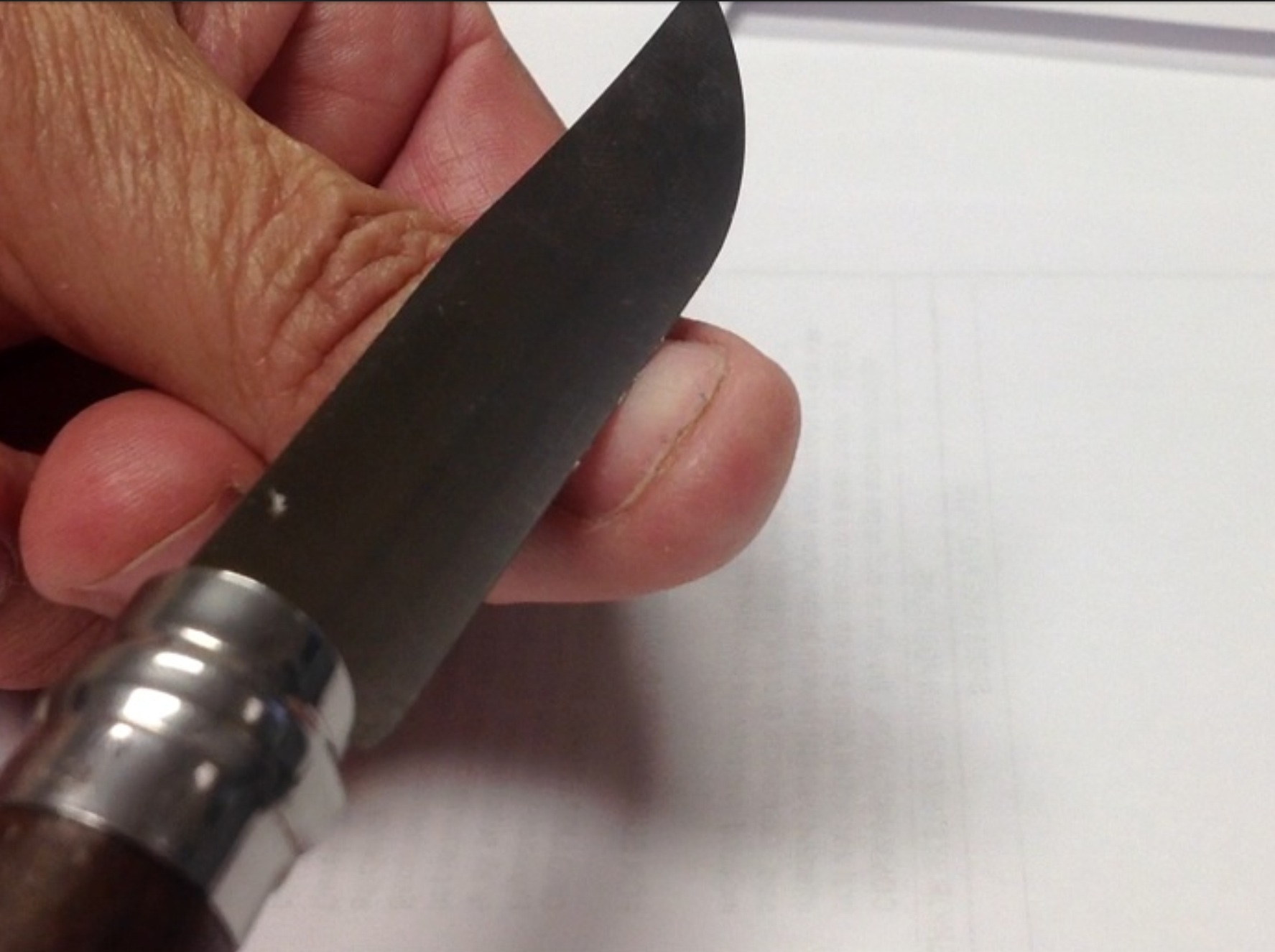
I tested the edge at various points along its length by very lightly placing the edge onto my finger nail and found that the blade would hang on my finger nail in the middle of the blade but not at the base or tip. Boating Lessons Learned I interpreted this to mean that I had not sharpened the edge evenly and needed to continue sharpening the ends. To help me see what I was doing wrong I took a tip from Blademag.com. They recommended using a permanent marker to color the edge so that I could see tail tell wear marks indicating my honing pattern. When I did that it was clear that I simply had not worn away enough metal from each end of the blade. So I kept honing focusing my efforts on the ends until the black ink was worn away and the blade would consistently hand my finger nail from blade end to end.

Inspection of the blade edge showed a sharp but course edge. I could easily see the scratches that the course stone left in the steel. The edge looked serrated but on a much finer scale. AH HA, thats what the finer side of the stone is for, to polish out those scratches! So just like in any sanding operation I used the finer stone to remove the scratches by honing down the steel until I got a uniformly smooth edge from end to end. As before I noticed that the center of the blade became smooth first so I gave each end a little extra attention then I tested for sharpness. Final inspection showed a much smoother edge but I could still see scratches left by the stone albeit shallower and closer together and a fine serration was still evident.

So step 3 was to polish the edge. I watched a video by Ray Mears that showed him polishing off the edge of his knife using a 6000 grit stone but I did not have such. A friend of mine advised using very fine sand paper so after some searching I found 2000 paper in the auto section of Walmart. The final polishing process proceeded just like the other steps except instead of using a wet stone I used the dry sandpaper as my honing media with the paper laid onto a flat surface, in this case a piece of plywood. The sandpaper really made a difference in the edge surface. It took about 100 strokes to do the job but in the end the edge was not just smooth, it was polished. And WOW. The knife was Sharp Sharp. In fact the knife was sharper than any factory fresh blade that I ever had. I tested it out on an old hard piece of 1/2″ nylon line and it sliced through it easily and cleanly. No lie. I have never had a knife that could cut through an old piece of rope without leaving a frayed end but this thing made a super clean cut without any fray at all.

Well being OCD like I am I spent the rest of the day sharpening all of my other knifes and even took in a few from the neighboring boats to sharpen. I would say that I experienced another Boating Lessons Learned.

OH. And thanks to all of you that have entered AMAZONthrough my blog and made purchases. It costs you no more to enter through my blog but when you do I receive a small percentage and it adds up. THANKS.
The content herein has a single theme: Mistakes …. or as I call them “Boating Lessons Learned”. While there may be elements of this site that appear to be advice about how to do some task you can be assured that it is not a complete and accurate “how to”. I am partially describing how I did something and what I learned. Do not rely on this information because Mcmanusboatworks.com makes no representations as to accuracy, completeness, correctness, suitability, or validity of any information on this site and is not liable for any errors, omissions, or delays in this information or any losses, injuries, or damages arising from its display or use. All information is provided on an as-is basis.

Posted in Boat Tools | Tagged , , , , , | 5 Comments

Boating Lessons Learned. Smart Phones are Powerful Tools

Boating Lessons Learned – Smart Phones are Powerful Tools. I use it to take photos while I work and with it I can:
– document steps of disassembly to speed reassembly
– see things around corners and in tight places
– capture images of parts and name plates to send to suppliers
– save a photo copy of a receipt
– document equipment conditions for later comparison

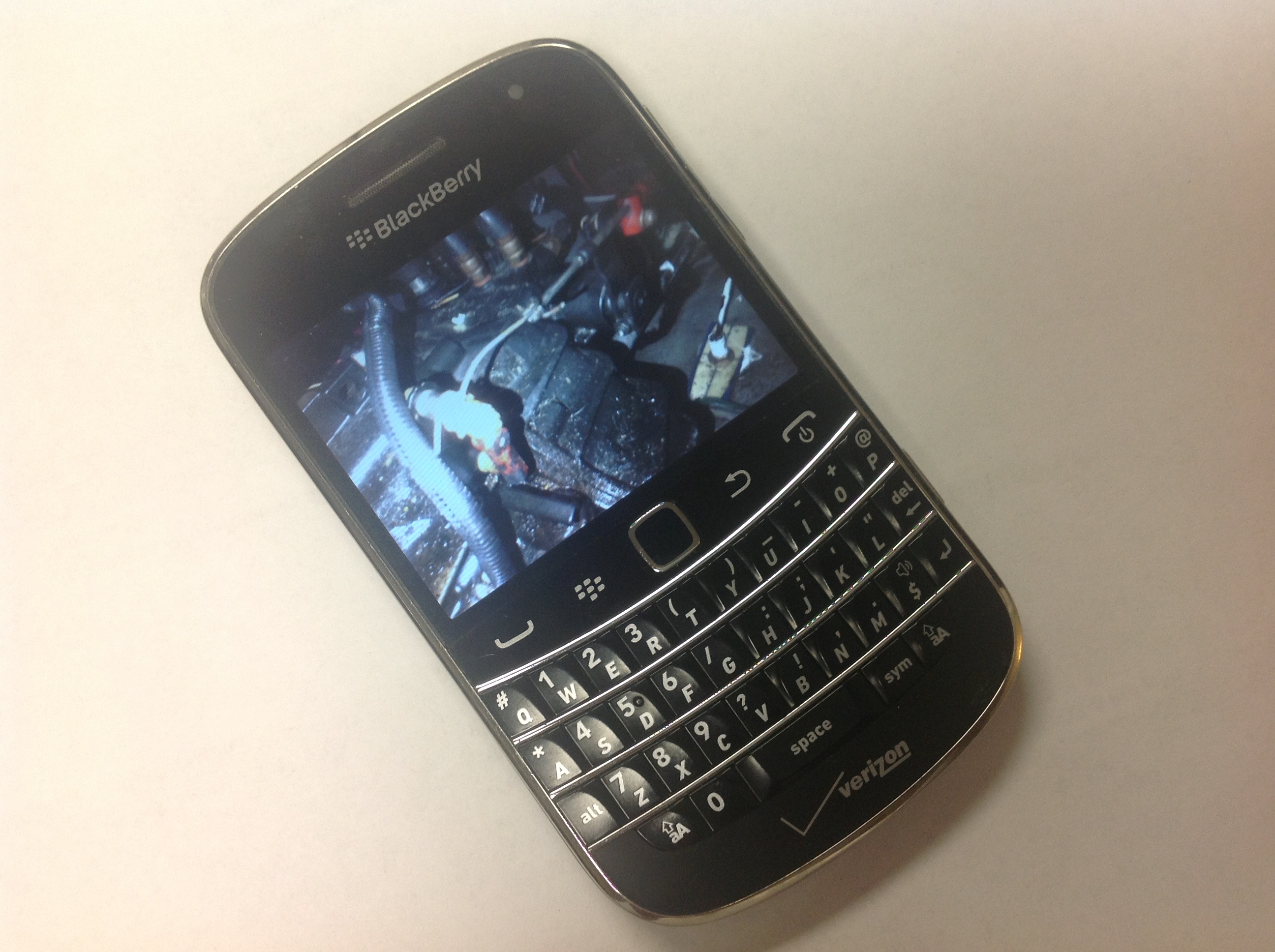
Smartphone

A few years ago I began using the camera in my smart phone to document the stages of disassembly of even the most simple mechanism. That way if I found myself stuck not remembering which way that carburetor choke rod mounted or whether the red wire goes on the right or the left I could review the photos and be sure that I was resembling the thing correctly. I find that using my phone in this manner speeds up my work. I am less tentative when taking on a new project and instead of wasting time staring at the thing trying in vain to memorize how the parts go together I now move forward at a much faster pace. And these days I find little need for note pads and time consuming sketches that I am not likely to be able to decipher anyway.

Yesterday I was checking out my air compressor name plate to determine whether it had the capacity to drive a soda blaster, or should I say I was attempting to read it. The name plate was on the side of the compressor and I could not get my head back around and onto that tight space far enough to see it clearly. So I took out my phone, held it around the corner, and took a few snap shots of the plate. The first few shots were off center but it only took minute to sight in the lens and get a clear shot of the model and serial number. A quick Internet search reveals the data I needed. And Hey; I can do the search on my smart phone too.

Last week in used the camera to communicate window construction details to the replacement window manufacturer. I just held up a tape measure to the window and took pictures of the demensions they needed. The pictures were worth more than the thousand words it would have taken me to describe the situation to them.

We were cruising a month or so ago and as I always do I scan my engine gauges periodically to see if operating conditions are within specification. But it never fails, I look at the temperature gauge or oil pressure gauge and think to myself … Hum. It seems to have changed since my last check. I wonder if I have a problem? So,I check again a couple of minutes later and this time I am just not sure. It seems to be the same as an hour ago but I am still concerned that I may have a problem beginning to show itself. So what I do now is I just take a shot of the dash gauges once the systems get equalized and then if I begin to question my memory I whip out the smart phone and compare the current conditions to the steady state condition of a few hours ago.

I have found a number of other uses too such as capturing a shot of a page in an operations manual so I don’t have to carry the whole book down into the bilge to perform a trouble shooting procedure. Or like last week I took a picture of the receipt I got from the parts store so I did not have to keep up with it in case I had to return the part. So these days I find myself reaching into my tool bag for my smart phone as often as I reach for my trusty 1/2″ – 9/16″ combo wrench. Well maybe not that often but suffice it to say that this is another Boating Lessons Learned.

OH. And thanks to all of you that have entered AMAZONthrough my blog and made purchases. It costs you no more to enter through my blog but when you do I receive a small percentage and it adds up. THANKS.
The content herein has a single theme: Mistakes …. or as I call them “Boating Lessons Learned”. While there may be elements of this site that appear to be advice about how to do some task you can be assured that it is not a complete and accurate “how to”. I am partially describing how I did something and what I learned. Do not rely on this information because Mcmanusboatworks.com makes no representations as to accuracy, completeness, correctness, suitability, or validity of any information on this site and is not liable for any errors, omissions, or delays in this information or any losses, injuries, or damages arising from its display or use. All information is provided on an as-is basis.

Posted in Boat Tools | Tagged , , , , , , , , | Leave a comment

Boating Lessons Learned – Pinterest is a Valuable Tool

Boating Lessons Learned – Pinterest is a Valuable Tool. I have found that utilizing Pinterest as my search engine and creating boards to compile product selections is a great way compare specifications and prices and make better inform purchasing decisions.

I recently discovered Pinterest.   What a treasure trove of creative ideas.  It is summer time so I have been drawn to the garden photos. And heaven forbid for some reason the woodland cabin photos been intriguing. Well hang me from the yard arm. What is a boat dweller doing lusting after log cabins? I deserve 50 lashes for just thinking of moving to high ground 😝. So after an hour or so of surfing I began to feel guilty.   Yes there are thousands of neat pictures and there are a lot of good ideas out there but Ugg. Just how many craft ideas and recipes can a person look at before it just becomes a waste of cellular data usage? I thought to myself surely there is some way to take advantage of this powerful tool. But nothing productive came to mind. So I kept mindlessly surfing and “pinning” witty quotes and pictures of old wooden sail boats.

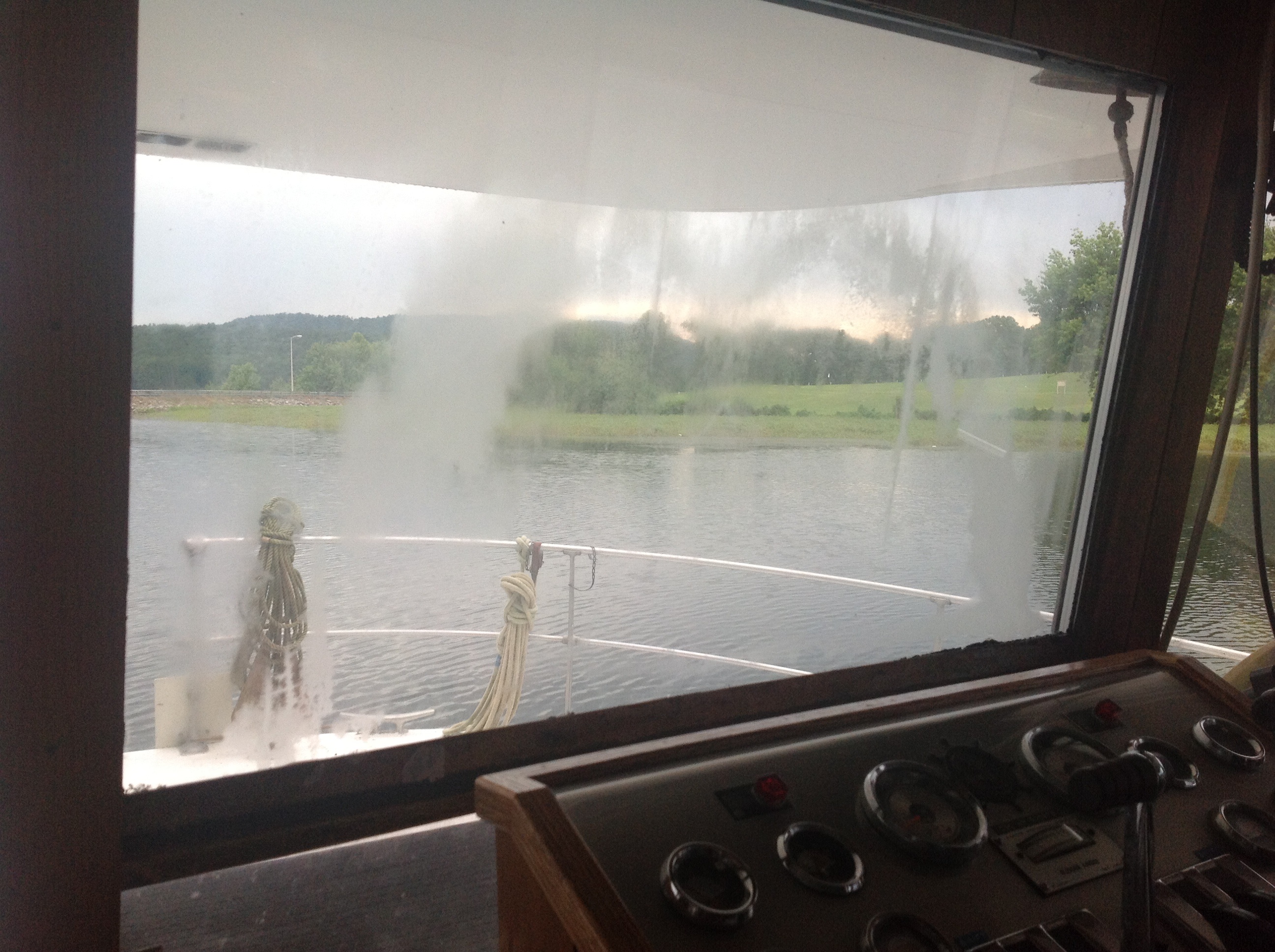
A few days later I found myself starting another boat project. This time it was boat windows. Our center helm station window has become fogged up. The original window is a fixed double pane window that has performed beautifully for decades.

image

The double pane window has worked well in this service in that it does not get condensation on the inside on those cold winter cruising days unlike all of my prior boats. I recall one Christmas cruise where we had to set up a hair dryer to blow on the front glass to keep the condensation at bay so that we could see out to pilot the boat. But now I can’t see through the double pane due to condensation that has formed between the panes.

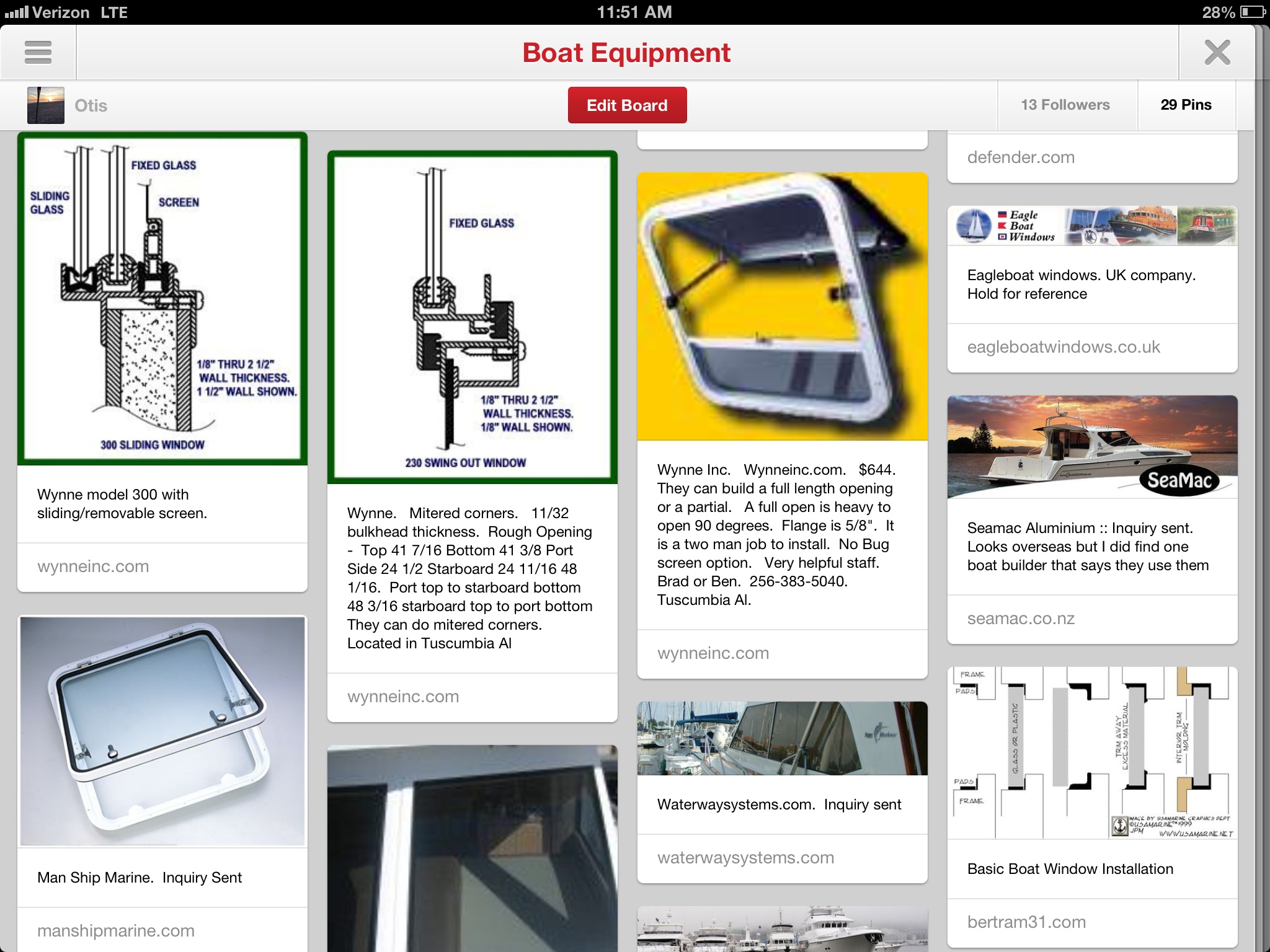
So I began searching the web for window suppliers and it wasn’t long before I found some good products that I wanted to compare. I bookmarked some sites and typed in some notes in my fancy dancy iPad feeling all smug about my Internet prowess. But honestly my notes were not much more than my usual hen scratching and I soon began hoping that I might remember the good product ideas and somehow find my way back to compare the best ones so that I could make an informed buying decision. And then it occurred to me. Hey, why don’t I search via Pinterest and make myself a board with all of the products that might fill the bill. That way I can search at my leisure, pin some pictures of the products I like, maybe drop in some “notes to self” on the pins, maybe include prices and phone numbers. And Hey, when I have exhausted my searches I can go back and review my finds side by side. I can click on my “pin” and instantly go to the product web site to review the specs in more detail.

Pinterest Board, Boat Equipment

Pinterest Board, Boat Equipment

And once I had narrowed my list down I decided why not send click on the contact link for each prospective supplier and get a qoute. Well it worked. Within a few hours I was receiving calls and by noon I had settled on my new window supplier. And the coolest part is they are located about an hours from here so I can drive over and pick up my new windoe. Hum. I never would have thought I would find a local supplier on the www much less on Pinterest. Maybe this Pinterest site is more than just visual chewing gum. Pinterest is another Boating Lessons Learned.

OH. And thanks to all of you that have entered AMAZONthrough my blog and made purchases. It costs you no more to enter through my blog but when you do I receive a small percentage and it adds up. THANKS.
The content herein has a single theme: Mistakes …. or as I call them “Boating Lessons Learned”. While there may be elements of this site that appear to be advice about how to do some task you can be assured that it is not a complete and accurate “how to”. I am partially describing how I did something and what I learned. Do not rely on this information because Mcmanusboatworks.com makes no representations as to accuracy, completeness, correctness, suitability, or validity of any information on this site and is not liable for any errors, omissions, or delays in this information or any losses, injuries, or damages arising from its display or use. All information is provided on an as-is basis.

Posted in Boat Tools | Tagged , , , , , , , , , , , , , , | Leave a comment